


 1-888-674-4601


Insights
How to Bring Math to Life With Real-World Projects
Many teachers love the idea of real-world math projects — until the worry sets in: Will this take time away from the skills my students are expected to master? With packed pacing guides and high expectations for fluency, that hesitation makes sense. But in the most effective math classrooms, projects don’t replace instruction — they anchor it. Core skills are still explicitly taught, practiced, and refined through daily lessons, centers, and targeted small-group work. The project simply becomes the reason students need those skills to matter.
And that reason matters more than we sometimes realize. Elementary students thrive when math feels purposeful — when it connects to the world they see and experience every day. Real-world math projects don’t just reinforce skills; they give students a reason to use them accurately and confidently. When students know they’ll need precise measurement, efficient addition, or strong multiplication strategies to solve a meaningful problem, engagement rises, understanding deepens, and math shifts from something they do to something they use.
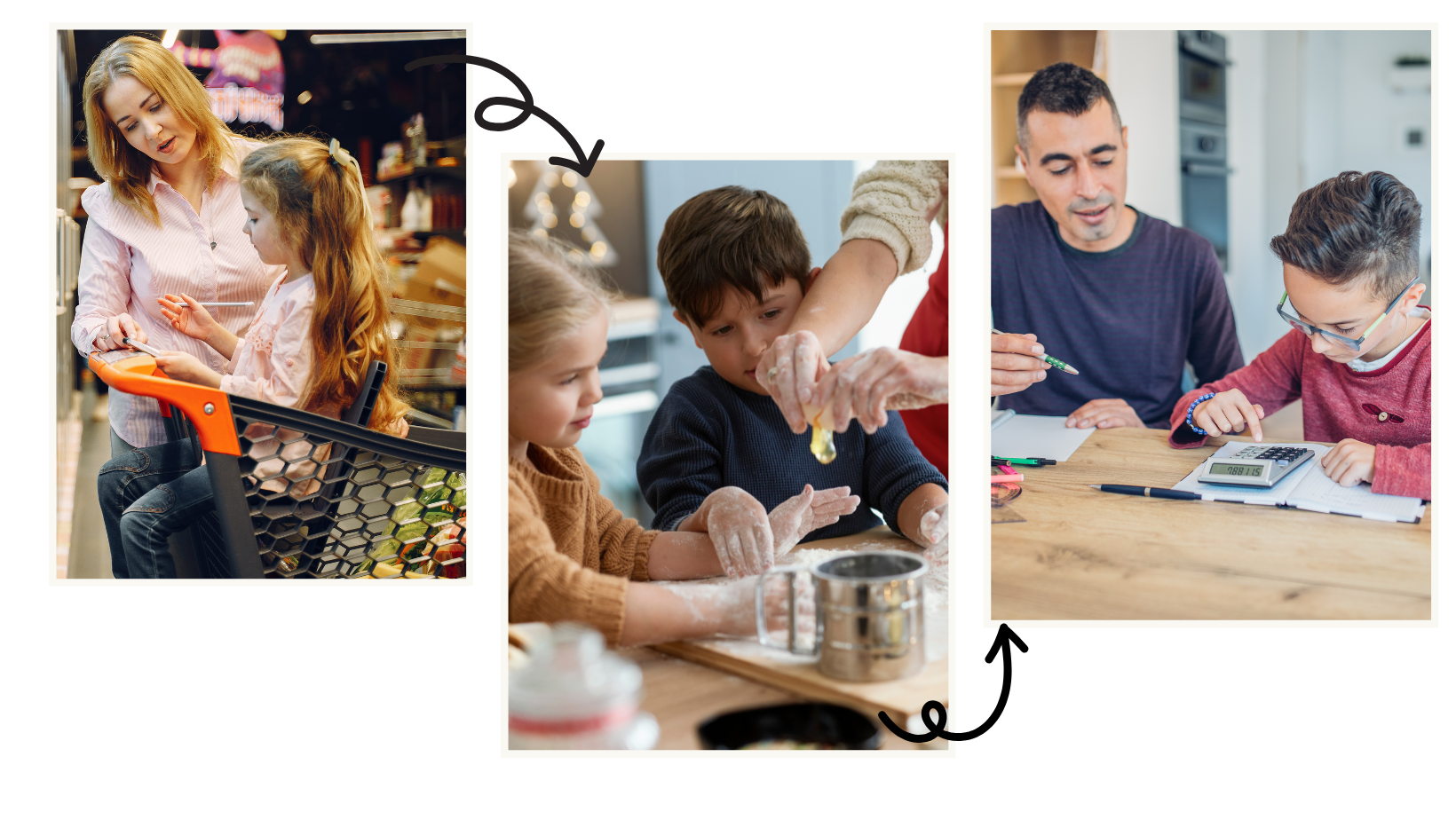
Real-World Math Projects for Every Grade (K-5)
Below, you’ll find a collection of grade-level project ideas (K–5) that align with core standards while helping students see math in their everyday world. They’re hands-on, meaningful, and adaptable for your classroom.
These projects also pair beautifully with ORIGO’s approach to concept development. In fact, many K–5 educators use Stepping Stones 2.0 and ORIGO’s supplemental materials to extend these ideas even further with ready-made tasks, games, and practice that support mathematical reasoning throughout each grade.
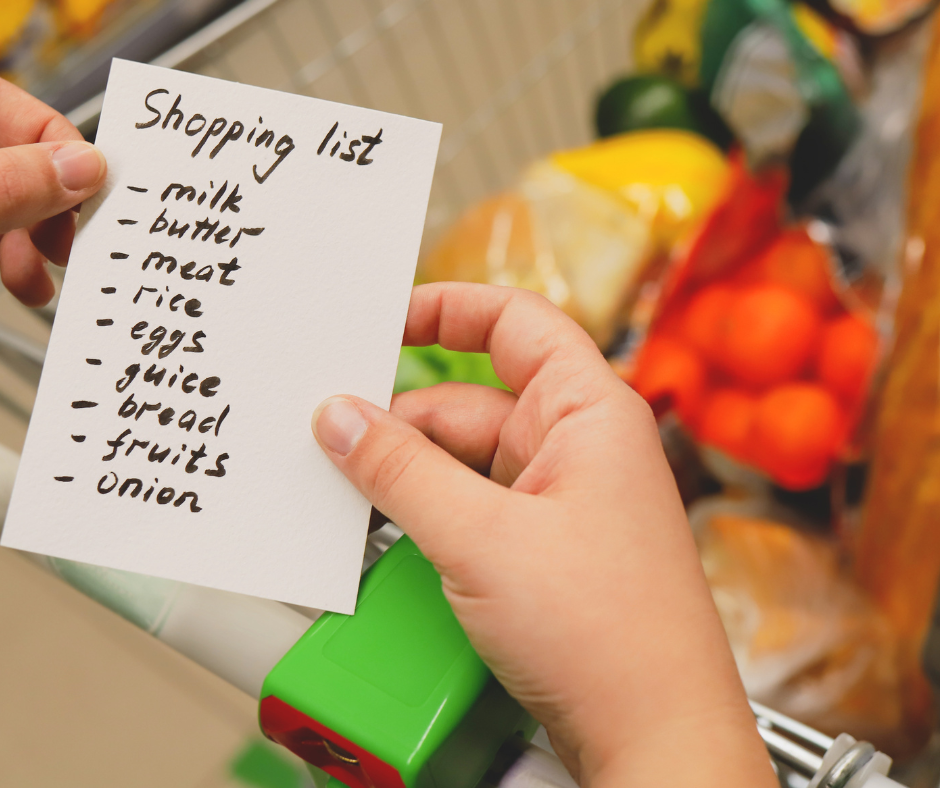
Kindergarten: “Our Classroom Grocery Store”
Standards Alignment
Counting & Cardinality, Comparing Numbers, Classifying Objects
Project Overview
Transform a corner of your classroom into a mini grocery store using empty boxes, pretend food, baskets, and play money. Students “shop” by counting items, comparing quantities, and sorting goods.
What Students Do
- Count sets of objects (“Put 6 oranges in your basket”).
- Compare (“Do we have more cereal than soup?”).
- Sort items by shape, size, color, or food group.
- Practice early addition while “checking out.”
Children love role-playing, and a grocery store is a familiar context that helps them attach meaning to counting and categorizing.
1st Grade: “Neighborhood Shape Hunt”
Standards Alignment
Geometry (2D/3D shapes), Measurement & Data
Project Overview
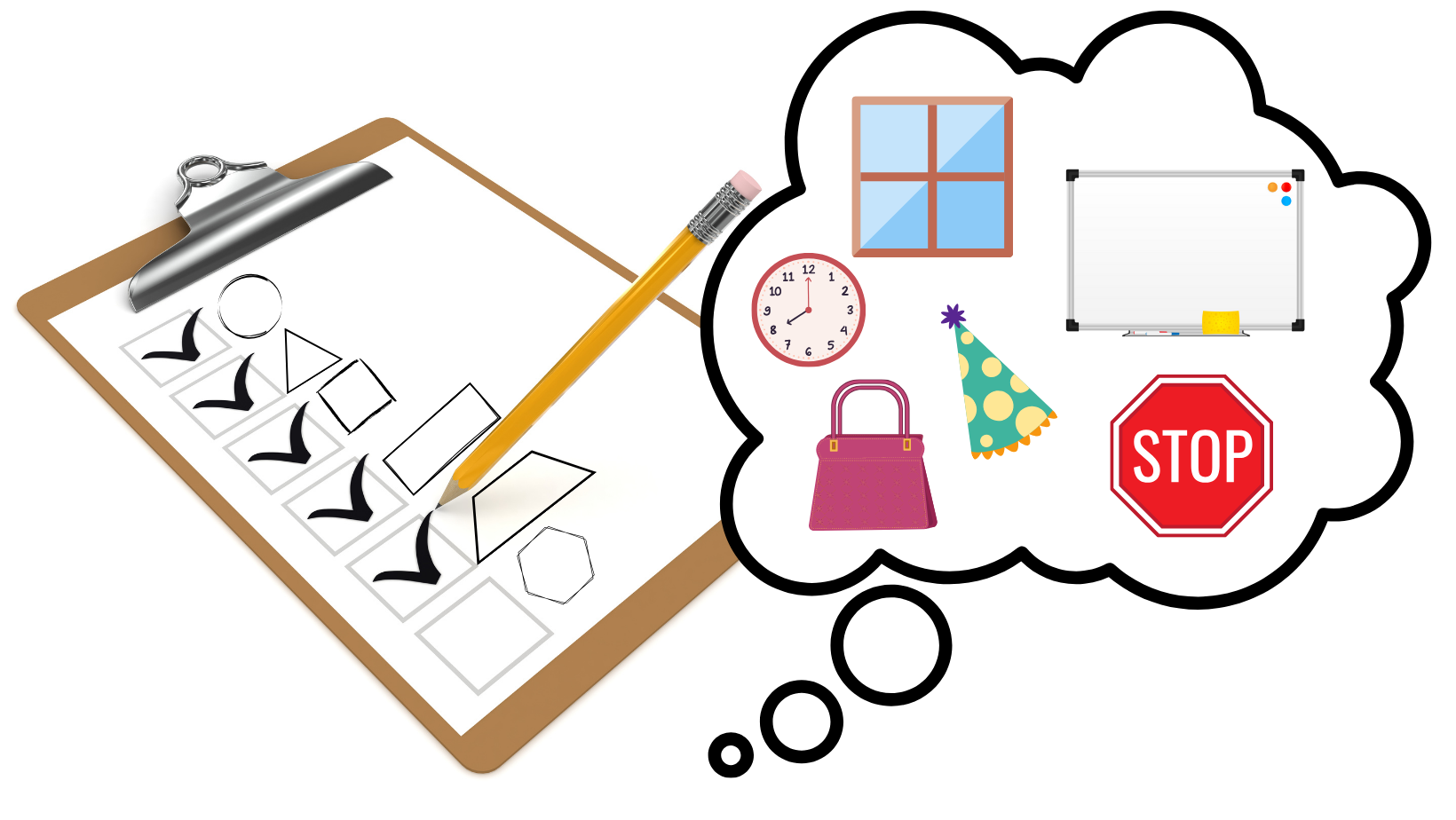
Take students on a shape scavenger walk around the school grounds or send them on a “home hunt” with a recording page.
What Students Do
- Identify geometric shapes in doors, windows, clocks, and playground structures.
- Sort findings using tallies or pictures.
- Create a class bar graph of the most common shapes found.
Students will begin noticing that shapes aren’t abstract — they structure the world around them.

2nd Grade: “Design Your Dream Bedroom”
Standards Alignment
Measurement (length), Addition/Subtraction, Arrays
Project Overview
Students create a floor plan of their ideal bedroom using graph paper. Furniture pieces become cutouts they can move around to explore layout and measurement.
What Students Do
- Measure items in inches/centimeters.
- Use arrays to show size (e.g., “my bed is 3 × 5 squares”).
- Add lengths to find area or perimeter.
- Solve spatial constraints (“the dresser must go against a wall”).
This project mirrors what designers, builders, and architects do — perfect for students who love building or drawing.
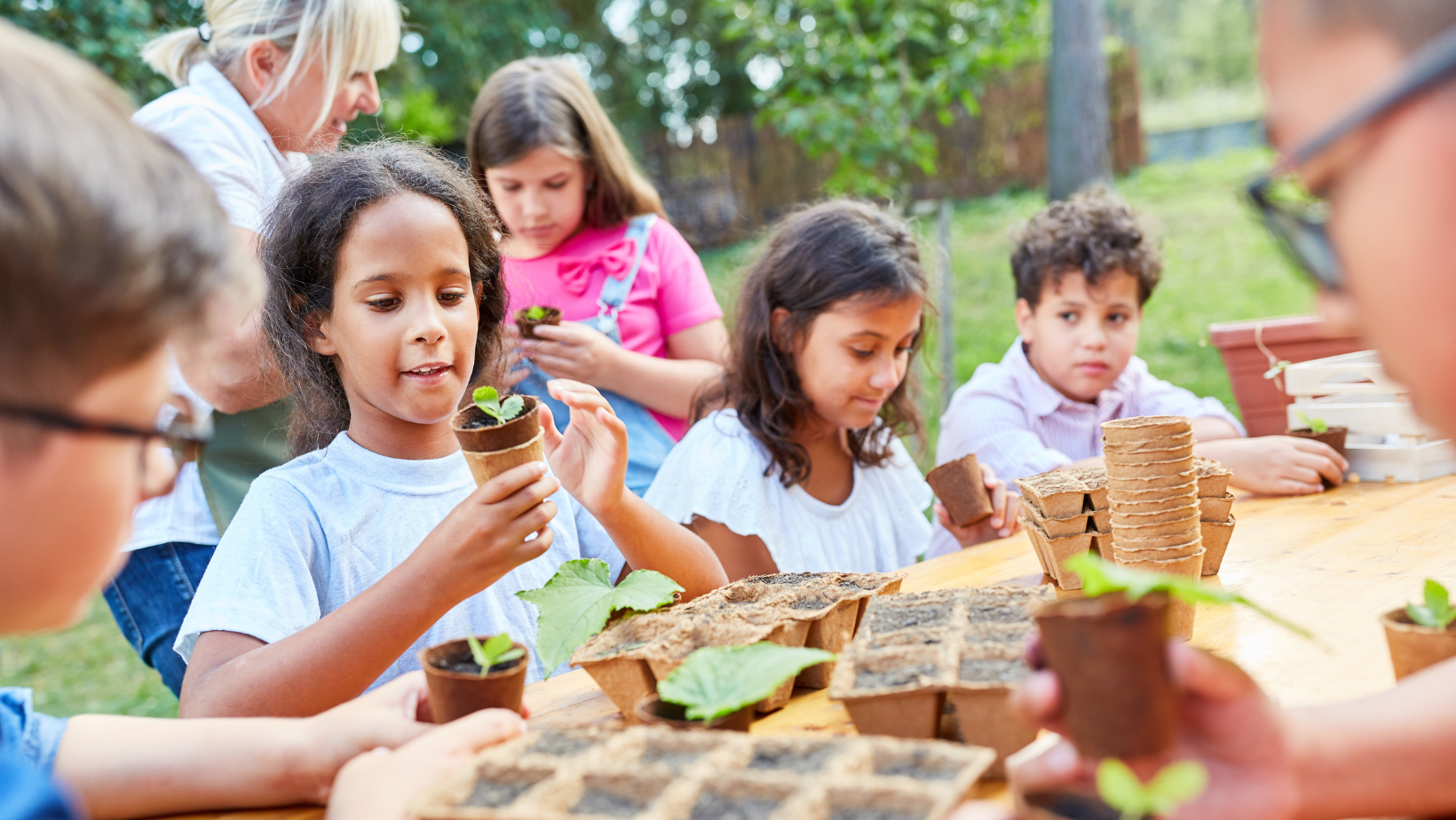
3rd Grade: “Plan a School Garden”
Standards Alignment
Multiplication & Division, Area, Fractions
Project Overview
Designing garden plots gives students a meaningful way to apply multiplication, equal groups, and area.
What Students Do
- Use arrays to model garden beds.
- Partition plots into fractional sections (½ tomatoes, ¼ lettuce, etc.).
- Solve real-world multiplication/division (“24 plants… how many per row?”).
- Record data in a planting chart.
This project shows that multiplication isn’t just repeated addition — it’s a tool for solving real-life planning problems.

4th Grade: “Run a Classroom Snack Shop”
Standards Alignment
Multi-Digit Multiplication, Division, Decimals, Measurement
Project Overview
Set up a small “store” where students sell pencils, erasers, bookmarks, or small snacks. (Plastic coins work perfectly!)
What Students Do
- Set prices using decimals.
- Calculate change using subtraction and number lines.
- Track inventory with addition/subtraction.
- Analyze simple profit/loss scenarios.
Students get a taste of real-life money skills and decision-making while practicing operations and decimals.

5th Grade: “Plan a Family Road Trip”
Standards Alignment
Fractions, Decimals, Volume, Multi-Step Word Problems
Project Overview
Students design a 3–5 stop road trip using printed maps or digital map tools.
What Students Do
- Calculate mileage between stops.
- Estimate fuel cost using gas price and tank volume.
- Budget meals, lodging, or tickets with decimals.
- Add driving time + break time for total travel hours.
This project blends multi-step reasoning with actual problem-solving tasks adults do every day.
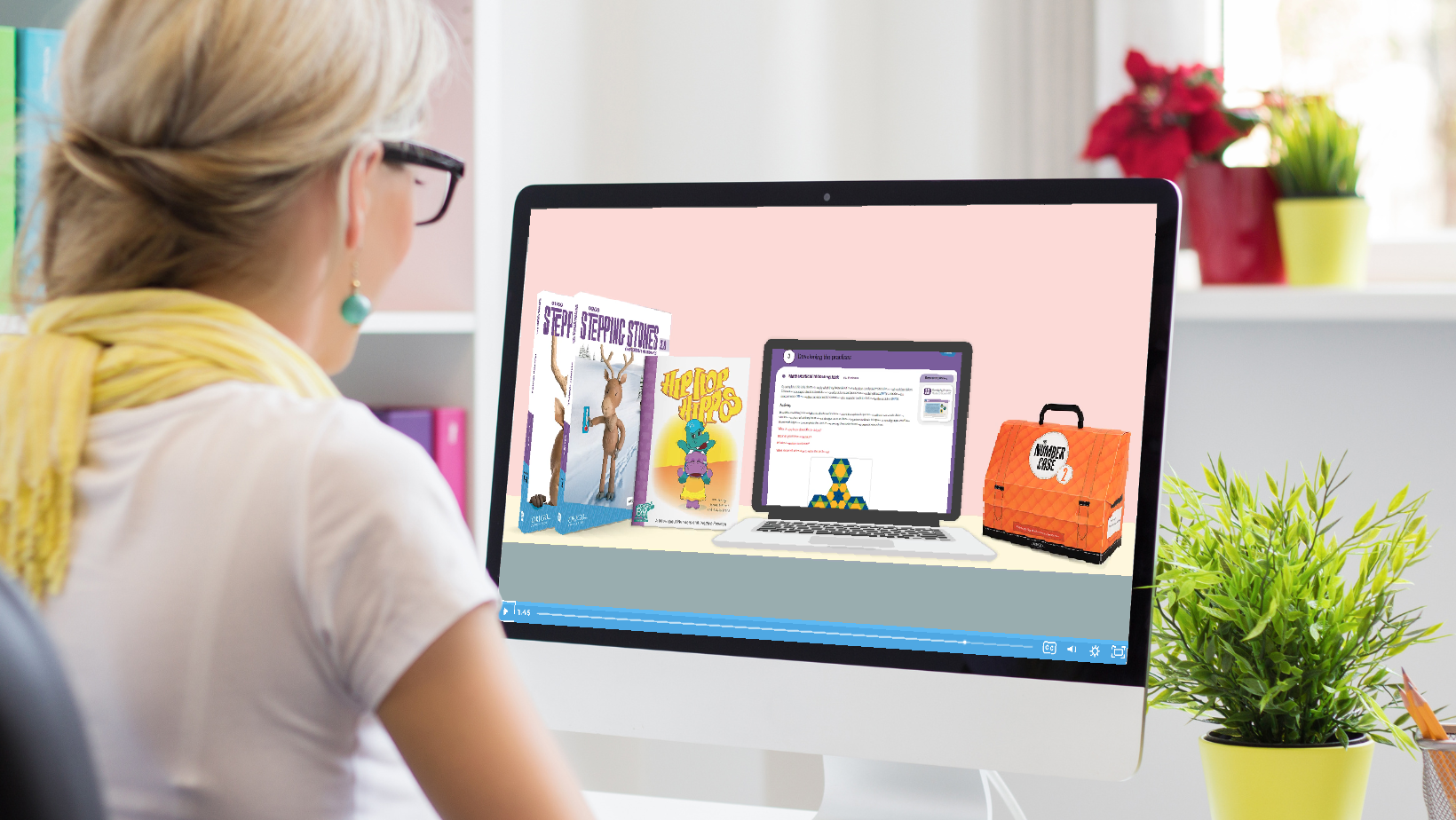
Where ORIGO Education Fits In
Real-world projects are powerful, but teachers also need tools that support these tasks with strong conceptual scaffolding. That’s where ORIGO Stepping Stones 2.0 shines.
- Stepping Stones 2.0 provides a coherent K–6 progression, ensuring that the skills each project requires are built intentionally throughout the year.
- Lesson sequences, games, and problem-solving tasks deepen understanding before and after students tackle hands-on projects.
- Supplemental resources (like Mathementals and Fundamentals) support quick practice, center activities, and small-group work connected to these real-world tasks.
When paired with Stepping Stones, real-world math projects become even more meaningful — students have the conceptual foundation they need to dive in confidently.

Bringing Math to Life — One Grade at a Time
You don’t need huge budgets or elaborate materials to make math feel alive. You just need meaningful contexts. Whether students are planning a garden, designing a bedroom, or running a snack shop, they’re not just “doing math”—they’re seeing its purpose.
And when we help students see math in the world around them, we’re not only building skills…we’re building thinkers

 1-888-674-4601