

 1-888-674-4601


Insights
Stories That Spark Mathematical Thinking
“Stories are the single most powerful weapon in a leader’s arsenal.” – Howard Gardner, Developmental Psychologist
Before students solve multi-step problems or analyze data, they are learning something just as important: how to make sense of the world. For young learners, that sense-making often begins with stories. Picture books give students a shared context, accessible language, and a reason to talk—creating natural entry points into mathematical ideas that might otherwise feel abstract.
In elementary classrooms, literature can do more than support reading—it can open the door to meaningful mathematical thinking. Stories offer a way to slow down, ask better questions, and make space for student thinking. They also help students recognize that the math they are learning now is the same math real people use in science, technology, medicine, and countless other fields. The small moments you create around a shared text are building understanding that lasts far beyond the lesson.

Why Math and Literacy Belong Together
A strong body of research supports the integration of literature into mathematics instruction, especially for younger learners. When students read, talk, and write about math, they develop deeper conceptual understanding and stronger problem-solving skills. According to the National Council of Teachers of Mathematics, mathematical proficiency requires not only procedural skill, but also reasoning, communication, and representation.
Math-focused read-alouds support this work by:
- Building conceptual vocabulary in context
- Supporting comprehension and sense-making
- Providing equitable access points for all learners
- Encouraging students to justify and explain their thinking
In Using Children’s Literature to Teach Mathematics: An Effective Vehicle in a STEM World, Joseph M. Furner explains that children’s literature allows teachers to introduce mathematical concepts in a non-threatening, accessible way. Through stories, students can connect with math ideas without feeling intimidated or turned off, supporting deeper understanding and engagement in ways that traditional approaches do not always achieve.
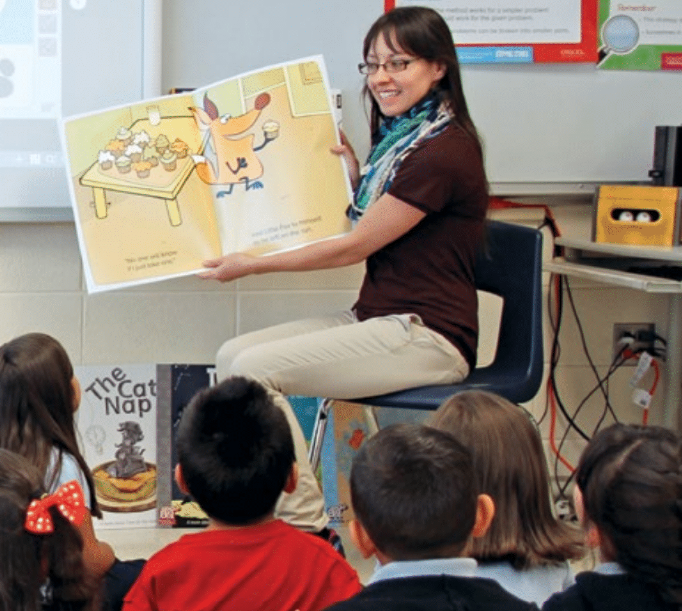
Teacher reading ORIGO Big Book “Cupcake Capers”
Using Literature to Spark Mathematical Thinking
A well-chosen book invites curiosity, discussion, and mathematical questioning — often before any numbers are introduced.
For younger learners, particularly in pre-K through second grade, ORIGO’s Big Books and Animated Big Books are designed specifically to prompt mathematical discourse through visuals, repetition, and purposeful questioning — making them ideal for whole-class exploration and early concept development.
Used alongside broader children’s literature, they help anchor abstract ideas in concrete experiences. Check out the examples below to help naturally support mathematical thinking:
Patterns and Structure
- Pattern Bugs by Trudy Harris
- The Shape of Things by Dayle Ann Dodds
- Caty the Caterpillar ORIGO Big Books (Pre-K)
- Parker’s Patterns ORIGO Big Books (Pre-K)
- Perfect Patterns ORIGO Big Books (5K)
- Patterns Here, Patterns There ORIGO Big Books (Grade 1)
- A Simple Stew ORIGO Big Books (Grade 1)
These texts help students notice repetition, predict what comes next, and describe structure.
Measurement and Comparison
- How Big Is a Foot? by Rolf Myller
- Measuring Penny by Loreen Leedy
- Buster the Balloon ORIGO Big Books (Pre-K)
- Stan the Firefighter ORIGO Big Books (Pre-K)
- The Clown’s New Clothes ORIGO Big Books (5K)
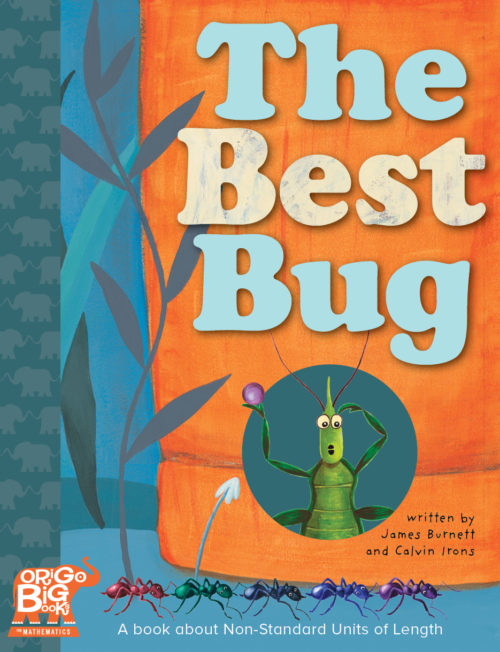
- The Best Bug ORIGO Big Books (Grade 1)
- Marvin Likes to Measure ORIGO Big Books (Grade 2)
Books like these spark conversations about estimation, units, fairness, and precision, helping students understand that measurement is about reasoning, not just tools.
Geometry and Spatial Reasoning
- The Greedy Triangle by Marilyn Burns
- Round Is a Mooncake by Roseanne Thong
- Look and See ORIGO Big Books (Pre-K)
- The Great Shape Race ORIGO Big Books (Grade 2)
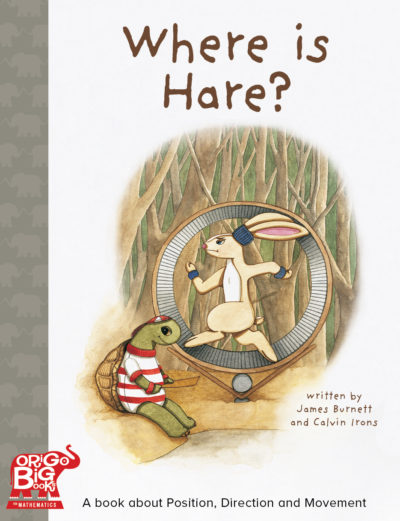
- Where is Hare? ORIGO Big Books (Grade 2)
These stories encourage students to define attributes, compare shapes, and see geometry reflected in their everyday environment. In doing so, they help students realize something powerful: the math they are learning is not just for the classroom—it is the same kind of thinking real people use to solve real problems.
That realization opens the door to the mathematicians shaping today’s world.
Real-Life Mathematicians and the Elementary Roots of Their Work
One of the most powerful messages we can give students is that math is not something you “grow out of” — it’s something you grow into.
The mathematicians shaping today’s world didn’t begin with complex equations or advanced tools. They began by exploring numbers, noticing patterns, asking questions, and making sense of ideas—exactly the kind of work happening in elementary classrooms every day.
The math learned at this stage lays the groundwork for everything that follows, from scientific discovery to innovation across countless careers.
Each of the mathematicians below is presented in a student-friendly format that can be read aloud, discussed, and revisited throughout the year. Each section includes:
- A short kid-friendly description to read aloud
- Discussion prompts to spark discourse
- A literature connection (picture book or Big Book)
Share these mathematicians to help remind students that big ideas grow from small beginnings — and that the math they learn today shapes how they think tomorrow.
Math Isn’t Just for Math Class
Using Real Mathematicians to Build Math Meaning in K–5
When you’re learning math in school, it might feel like it’s all about worksheets, homework, or getting the right answer. But math is actually one of the most important tools people use to understand the world—and it all starts with the math you’re learning right now.
The mathematicians who solve big problems today didn’t start with hard equations. They started by counting, noticing patterns, making mistakes, and trying again—just like you.
Let’s meet a few people who use math to change the world.
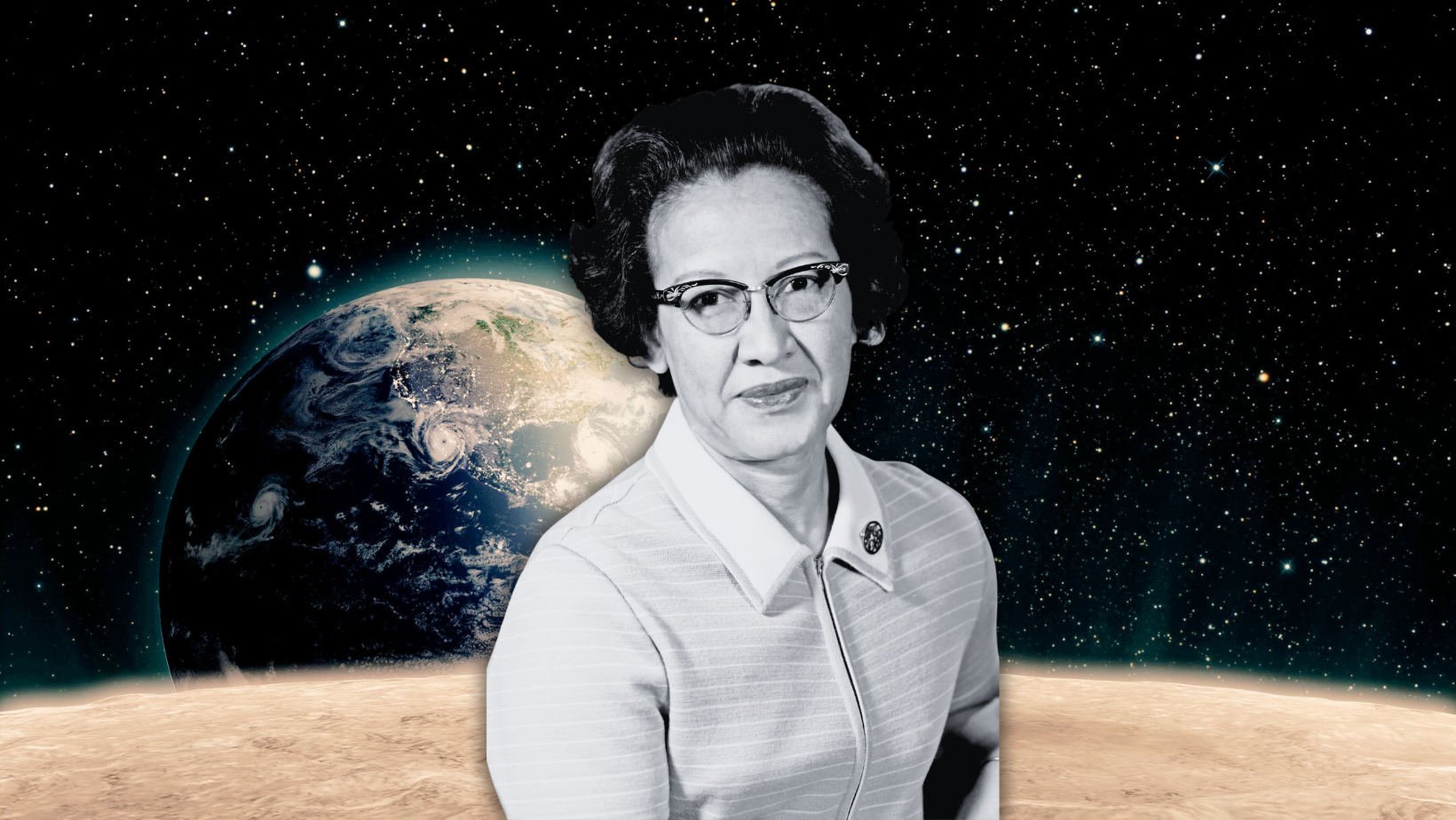
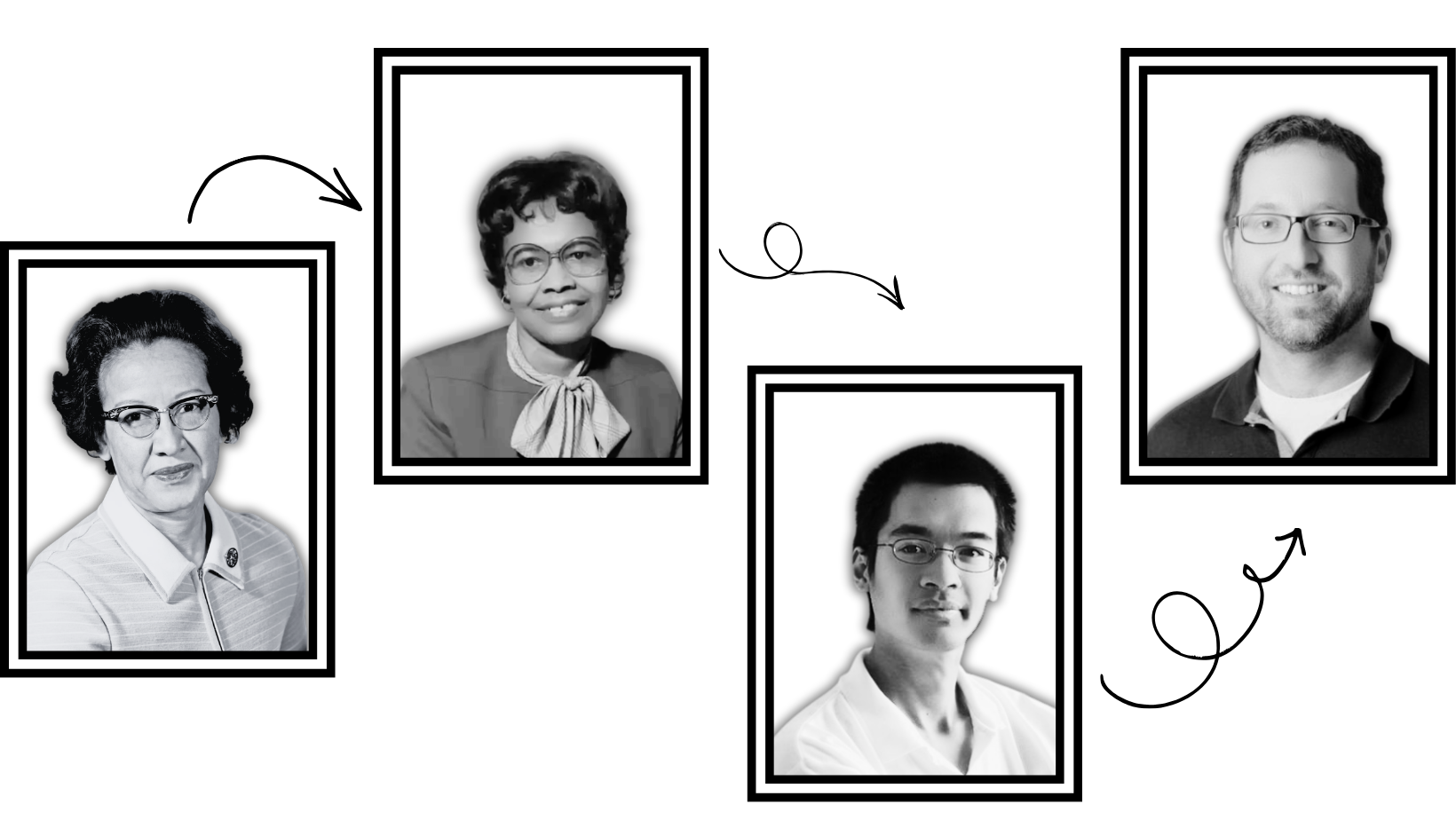
Katherine Johnson — Mathematics & Space Science
Katherine Johnson was a mathematician who helped astronauts travel safely to space — and back home to Earth. When she was a student, she didn’t just solve math problems quickly. She asked questions, noticed patterns, and wanted to understand why numbers worked the way they did.
The math Katherine used at NASA started with ideas students learn in elementary school — adding and subtracting carefully, comparing distances, and thinking about how objects move through space.
Big idea: Math helps people solve real problems — even problems as big as space travel.
Discussion Prompts:
- What math do you think astronauts need to travel safely?
- Why is understanding distance and direction important?
- How does checking your work help when solving important problems?
Literature Connection:
- Mae Among the Stars by Roda Ahmed
- The Space Party ORIGO Big Book (Grade 1)
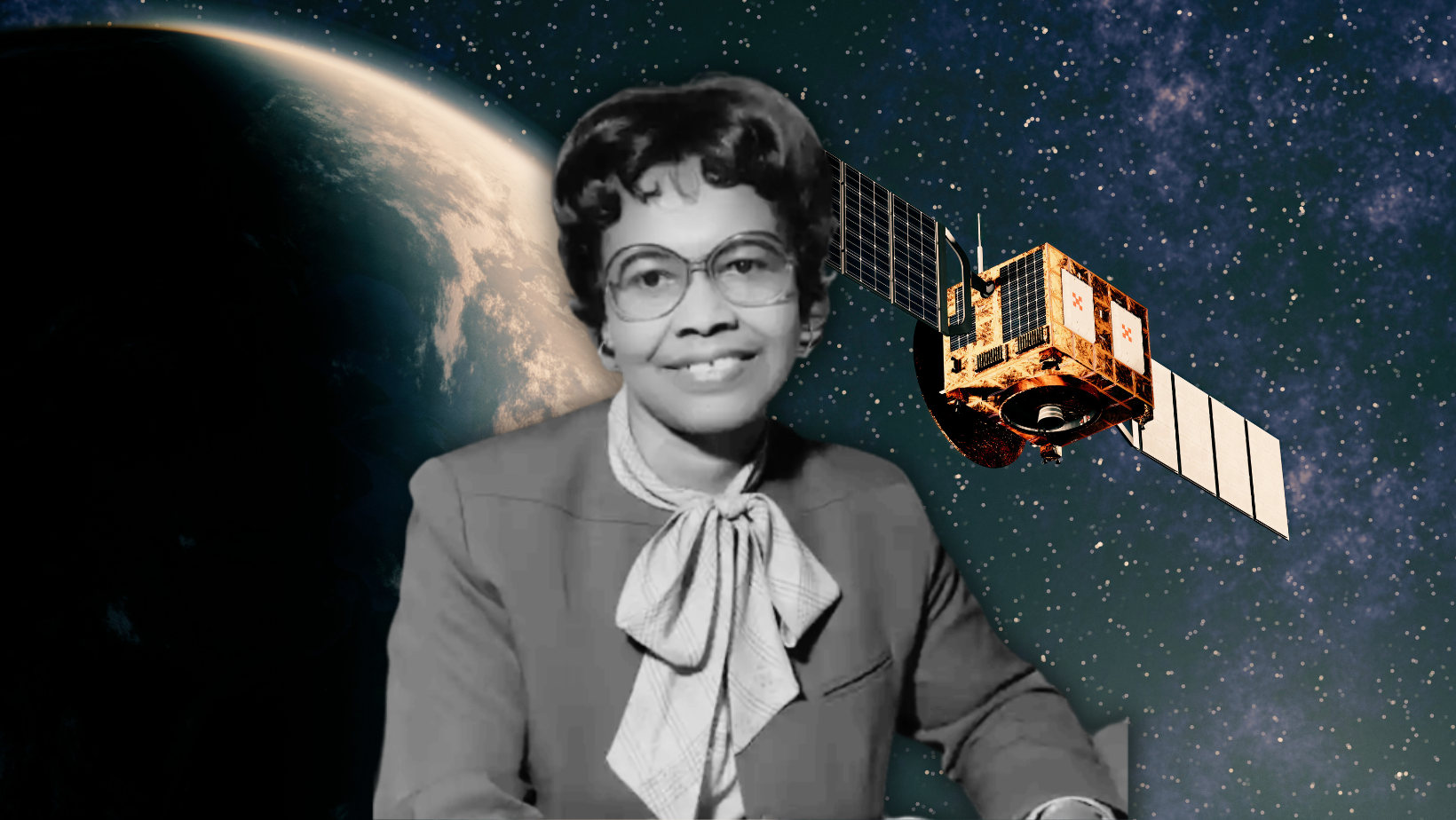
Gladys West — Mathematics & Technology
Gladys West used math to help create GPS — the technology that tells us where we are and how to get where we’re going. Her work involved studying data and understanding the shape of the Earth.
The thinking Gladys used began with simple ideas students practice in school, like organizing information, reading maps, and reasoning about distance.
Big idea: Math helps us understand where we are — and how to get where we’re going.
Discussion Prompts:
- When have you used a map or GPS before?
- Why is it important to know where things are located?
- How does organizing information help us make decisions?
Literature Connection:
- Follow That Map! by Scot Ritchie
- Where is Hare? ORIGO Big Books (Grade 2)
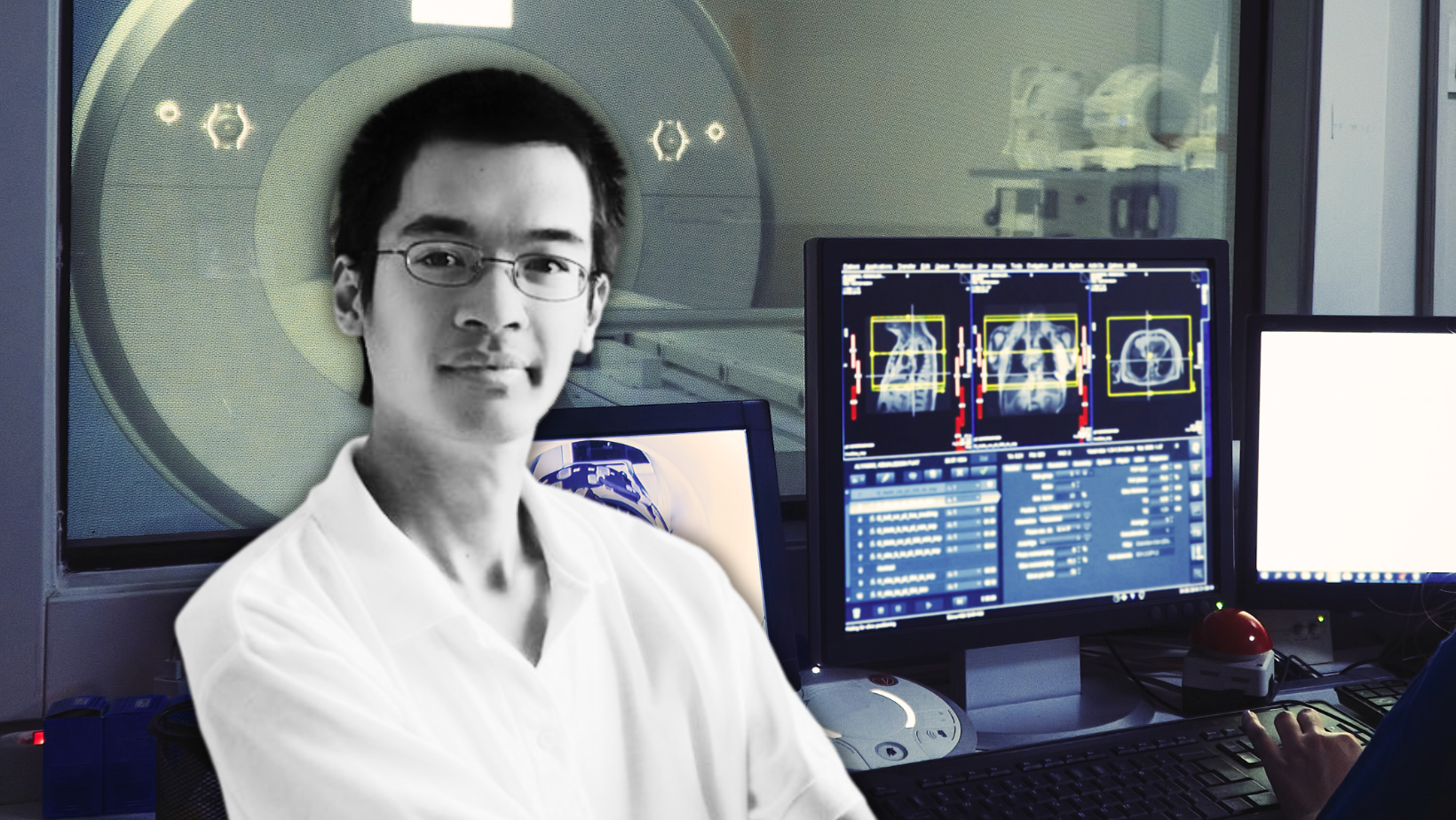
Terence Tao — Mathematics & Problem Solving
Terence Tao is a mathematician who used math to help doctors take clearer pictures of the inside of the body more quickly. His work helped make MRI scans faster—so patients don’t have to stay still as long, and doctors can get the information they need sooner.
He believes that being good at math isn’t about being fast — it’s about understanding.
As a student, Terence spent time thinking deeply about problems, looking for patterns, and trying different strategies until ideas made sense.
Big idea: Understanding math is more important than finishing first.
Discussion Prompts:
- Why might it be okay to take your time on a math problem?
- What can you do if your first strategy doesn’t work?
- How do patterns help you solve problems?
Literature Connection:
- Which One Doesn’t Belong? by Christopher Danielson
- Perfect Patterns ORIGO Big Books (5K)
- Patterns Here, Patterns There ORIGO Big Books (Grade 1)
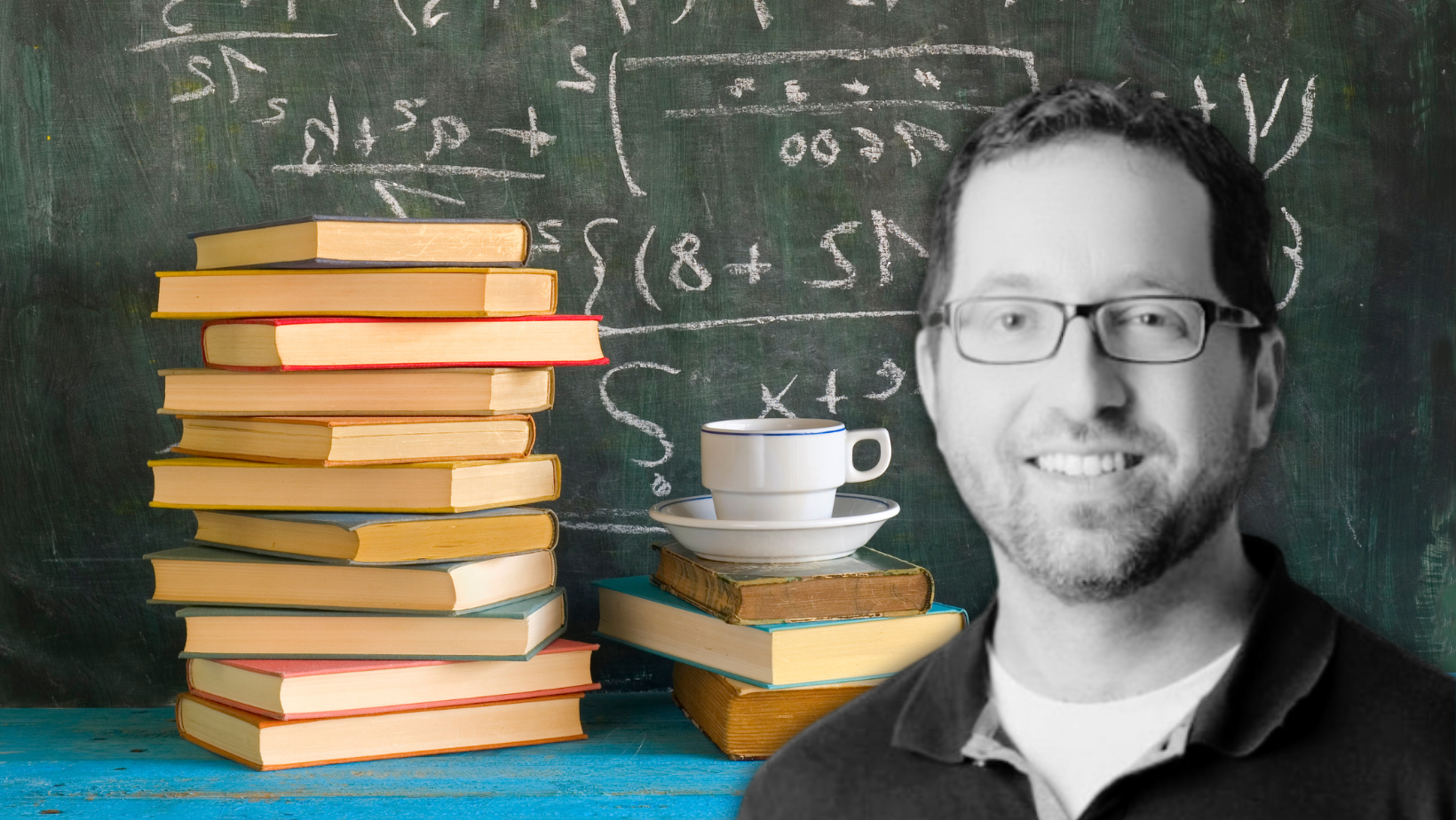
Jordan Ellenberg — Mathematics & Literature
Jordan Ellenberg is a mathematician who writes stories to explain math ideas. He shows that math and reading are connected — both help us explain how the world works.
When students talk or write about how they solved a problem, they are doing the same kind of thinking Jordan uses.
Big idea: Math is a way of telling a story about ideas.
Discussion Prompts:
- How is explaining math like telling a story?
- Why is it important to explain how you know something?
- What makes a good math explanation?
Literature Connection:
- Math Curse by Jon Scieszka
- Mice, Mice Everywhere ORIGO Big Book (5K)

Why Math Matters for Your Future
Math helps people:
- Design buildings
- Create video games
- Study the weather
- Cure diseases
- Manage money
- Solve problems in everyday life
But even more important than the math itself is what math teaches you:
- How to think clearly
- How to solve problems
- How to keep trying when things are hard
Big ideas do not begin with advanced formulas. They begin with noticing, wondering, and talking things through.

 1-888-674-4601