


 1-888-674-4601


Insights
Kickstarting Math Fact Fluency without Drills
Fun, Low-Pressure Ways to Review Basic Skills

Students using ORIGO’s Stepping Stone’s curriculum
As elementary teachers, we know that math fact fluency is the foundation for nearly every concept students will encounter in later grades. But let’s be honest—endless flashcards, timed drills, and worksheets can take the joy out of learning. Instead of helping, these high-pressure approaches often leave students anxious about math. The good news? Building math fact fluency doesn’t have to mean drills. In fact, there are many fun, low-stress ways to help students confidently recall basic facts—and even enjoy the process.
At ORIGO Education, we believe fact fluency is about so much more than speed—it’s about building confidence, flexibility, and number sense. In this article, we’ll unpack why fluency matters, explore what it really looks like in the classroom, and share creative, low-pressure ways to make practice playful.
What Is Math Fact Fluency?
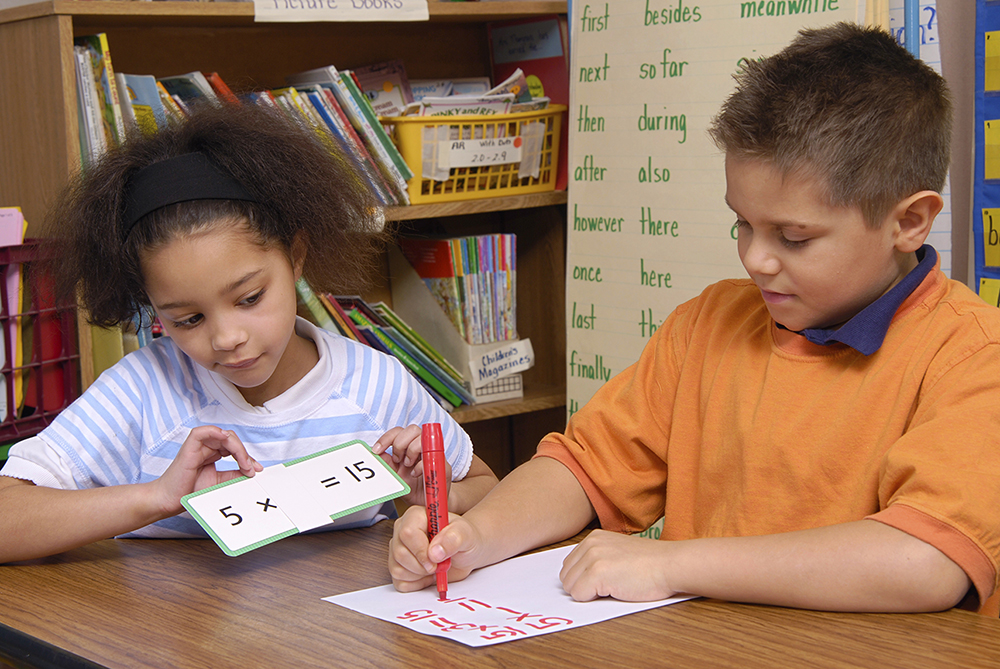
Students using ORIGO’s Book and Box of Fact Strategies
When we talk about fluency, many people jump straight to “speed.” But fluency is so much more. True math fact fluency includes:
- Accuracy: Students get the right answer consistently.
- Efficiency: Students use strategies that make sense, not just counting on fingers forever.
- Flexibility: Students can apply multiple strategies to the same fact.
So while speed may be a byproduct of fluency, it’s not the main goal. Our aim is confident, flexible problem solvers who understand number relationships.
Why Not Timed Drills?

Research consistently shows that timed drills can create math anxiety, especially for students who already struggle. Rather than reinforcing facts, drills often reinforce fear. According to Jo Boaler’s Fluency Without Fear: Research Evidence on the Best Ways to Learn Math Facts, timed testing not only heightens anxiety but also reduces working memory, making it harder for students to recall facts in the moment.
That’s why we need to shift the narrative: fact practice can be engaging, hands-on, and collaborative.
Fun, Low-Pressure Ways to Build Math Fact Fluency

Here are some teacher-tested, student-approved strategies to review facts without falling back on stressful drills.
1. Play Math Games with a Purpose
Games provide natural repetition, but in a way that feels like play rather than work. Card games, dice games, and board games offer constant opportunities for practicing addition, subtraction, multiplication, and division facts.
- Example for Addition/Subtraction (K–2): Play “Fact War” with two cards—each player flips two cards and adds them. The highest sum wins.
- Example for Multiplication/Division (3–5): Try “Factor Bingo,” where students solve problems to mark their boards.
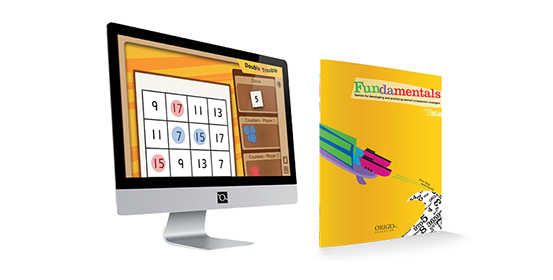
ORIGO’s Fundamentals books of classroom math games and strategies provides over 200 mathematical number games that develop students’ ability to calculate mentally through pairs and small groupings. The games improve student discourse, problem-solving abilities and encourage appropriate mathematical language.
2. Build Fluency through Stories and Visuals
Math stories and visuals help students see relationships rather than memorize in isolation. For instance, when learning doubles facts, a picture of twin puppies makes the concept stick. Stories give facts meaning and make them easier to remember.
- Classroom Idea: Use storybooks that naturally integrate fact families, then ask students to illustrate their own “fact family stories.”
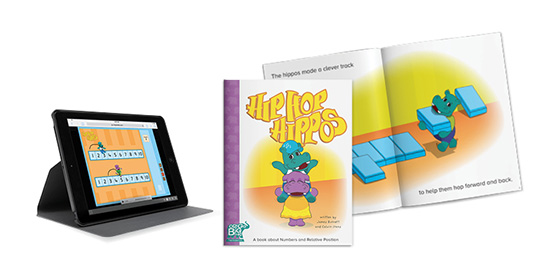
The ORIGO Big Books are perfect for this. They turn math ideas into engaging, illustrated stories that spark class discussions and help young learners anchor facts in context.
3. Use Hands-On Materials
Concrete manipulatives give students the chance to build understanding before moving to abstract recall. Counters, number lines, and ten-frames let students see patterns in facts and notice shortcuts.
- Example: Instead of drilling “8 + 7,” encourage students to show it with counters and discover “Make a 10” (8 + 2 + 5).

ORIGO Number Cases provide a toolkit of manipulatives, games, visual models, and over 200 ready-to-use math teacher resources that guide students toward fact fluency. They’re particularly useful for showing strategy development over memorization.
4. Make Practice Collaborative
Not every student thrives alone with a worksheet. Pair or group activities allow students to explain their thinking, hear others’ strategies, and learn new approaches.
- Classroom Idea: Try “Around the World” with a twist—students work in pairs to solve, explain, and check facts instead of racing against the clock.

The Student Journals from ORIGO’s Stepping Stones 2.0 curriculum encourage collaborative problem-solving. Students explain their reasoning in writing or discussion, building confidence and deeper understanding of facts.
5. Encourage Mental Math Routines
Short, daily mental math warm-ups help students practice without pressure. For example, pose three quick addition or multiplication problems and ask students to share how they solved them. Over time, students pick up efficient strategies from one another.
- K–2 Routine: Practice doubles and near doubles each morning.
- 3–5 Routine: Pose a “fact string” (e.g., 5 × 2, then 5 × 4, then 5 × 8).
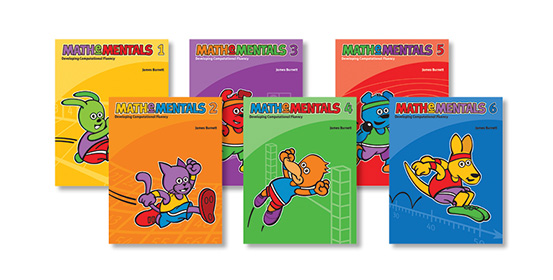
The ORIGO Mathementals, a set of books ranging from grades 1-6, are designed for this very thing. From quick warm-ups to workout pages, they provide daily mental math problems that gradually build strategy and fluency in short, no-stress bursts.
6. Connect Fluency to Real-Life Contexts
Facts feel less abstract when applied to situations kids care about—like sports scores, snacks, or video games.
- Example: Ask students to calculate total points if a basketball player scores 3 baskets worth 2 points each.
- Example: When lining up for lunch, ask how many legs are in the line if each student has 2 legs.
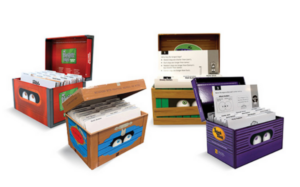
ORIGO’s Think Tanks are ready-made, strategy-based task cards that encourage fluency through reasoning and collaboration. They are differentiated by grade level and focus on helping students use mental strategies instead of rote recall.
How to Get Started
You don’t need to overhaul your entire math block to kickstart fact fluency in fun ways. Start small:
- Replace one timed drill with a quick game.
- Add a daily mental math routine.
- Incorporate visuals or manipulatives into fact review.
Over time, students will develop the accuracy, efficiency, and flexibility that define real fluency—without the anxiety.

As teachers, we want our students to see math as something to enjoy and feel confident about—not something to dread. By moving away from timed drills and embracing games, stories, visuals, and real-life connections, we help students build lasting fact fluency in low-pressure, joyful ways.
And with resources from ORIGO Education you’ll have the tools you need to make this shift smooth, engaging, and effective. Let’s show our students that math facts can be fun, flexible, and full of meaning!

 1-888-674-4601