


 1-888-674-4601


Insights
How to Plan Engaging Math Warm-Ups for the First Weeks of School
The first weeks of school set the tone for your entire math block. But between learning names, setting expectations, and practicing procedures, it’s easy for math to take a backseat. That’s why quick, engaging math warm-ups are such a game-changer.
In just 5–10 minutes a day, math warm-ups can:
- Ease students into thinking mathematically
- Build number sense and fluency
- Encourage student voice and reasoning
- Reinforce classroom routines and expectations
Planning math warm-ups for the first weeks of school is one of the simplest yet most powerful ways to set the tone for a successful year. These short routines help establish classroom culture, spark mathematical thinking, and build students’ confidence from day one. At ORIGO Education, we believe that starting strong matters—which is why we’re excited to share practical strategies, low-prep tools, and research-based resources that make warm-ups both meaningful and manageable.

What Are Math Warm-Ups (and Why Do They Matter)?
A math warm-up is a short activity that helps students transition into math thinking. Think of it like stretching before running—it primes their brains for learning.
In the first weeks of school, warm-ups do double duty. They help to build number sense and fluency, establish classroom norms and routines, and encourage risk-taking and math talk.
When used consistently, warm-ups can become the most predictable and beloved part of your math block.

How to Structure Math Warm-Ups in the First Weeks
Week 1: Focus on Community + Math Identity
In the very first week, your goal isn’t to review math skills—it’s to create a safe, positive math space. Start with low-pressure warm-ups that encourage thinking and discussion.
Try:
- “How many ways?” – Show the number 6 and ask, How many ways can you make 6? (drawings, objects, equations, stories)
- Estimation jar – Let students guess how many cubes or beads are in a jar and justify their guesses
- Math About Me – Invite students to share numbers that represent them (e.g., age, number of siblings, house number)
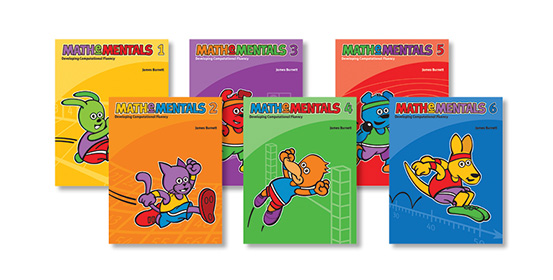
ORIGO Education’s Mathementals includes Blackline Masters and Math Games, a perfect practice resource to enhance your current math program before school, after school, or in summer programs. Each book includes: whole class and small group guided activities, individual practice activities, assessment activities, reproducible student progress chart, informal assessment guidelines, and answers.
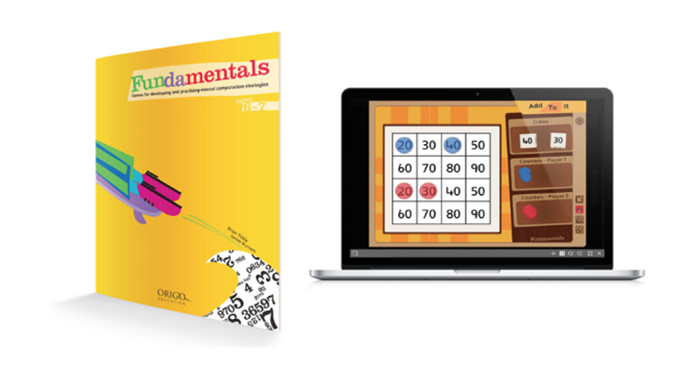
Additionally, ORIGO’s Fundamentals is a collection of 200 mathematical number games that develop students’ ability to calculate mentally through pairs and small groupings The games improve student discourse, problem-solving abilities and encourage appropriate mathematical language.
Week 2: Begin Light Number Work and Routines
Now that students are getting comfortable, you can introduce warm-ups that include more structured number sense routines.
Try:
- Number of the Day – Choose a number (e.g., 14). Ask students to show it in different ways: tens and ones, drawing, equation, tally marks, etc.
- Upper Elementary Extension (Grades 3–6): Choose a fraction (like ¾) or a decimal (like 1.6) and ask students to:
- Represent it on a number line
- Write equivalent fractions or decimals
- Express it as a sum (e.g., 1.6 = 1 + 0.6)
- Model it with base-10 blocks or fraction strips
- Write a word problem that would have this as an answer

- Would You Rather? (Math Edition) – Pose two choices and ask students to defend their answer (e.g., Would you rather have 5 dimes or 2 quarters?)
- Upper Elementary Extension (Grades 3–6): Examples:
- Would you rather walk ¾ mile or 0.6 mile? Why?
- Would you rather have 12 one-sixths of a pizza or 4 one-thirds?
Encourage students to use mathematical reasoning, estimation, and visual models to justify their thinking.
- Ten Frame Flash – Flash a filled ten frame for 3 seconds. Students identify the number and explain how they saw it.
- Upper Elementary Extension (Grades 3–6): Replace ten frames with base-10 blocks flashed quickly (e.g., 1 flat, 3 rods, and 2 units), and ask:
- What number did you see? How did you figure it out?
- Can you show that same number another way using different blocks?
- What would the number be if you added 0.1?

Check out ORIGO One videos—short, animated clips that explain math concepts in accessible language. These are great for reinforcing ideas like composing numbers or part-part-whole relationships early on.
Routines That Build Number Sense Over Time
Consistency builds confidence. These math warm-up routines are perfect for rotating throughout the year, especially in those first few weeks.
1. Number Talks
Display an expression like 8 + 7 or 15 – 9. Have students solve mentally and share different strategies. The focus is on how they got the answer—not just the answer itself.
- Upper Elementary Extension (Grades 3–6): Use more complex expressions like:
- 36 × 25
- ¾ + ½
- 1.2 – 0.75
- 480 ÷ 6
Encourage multiple strategies: partial products, area models, number lines, estimation, etc.
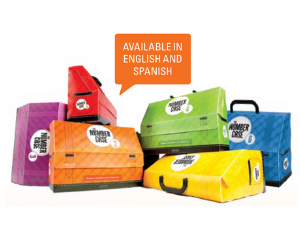
ORIGO offers Number Cases within the Stepping Stones curriculum to introduce and reinforce concepts and skills with pictorial resources. These cases are especially helpful for guiding number talks with visual support.
2. Which One Doesn’t Belong?
Show four numbers, shapes, or patterns and ask which one doesn’t belong. There’s often more than one right answer—students explain their reasoning.
- Upper Elementary Extension (Grades 3–6): Use more sophisticated categories such as:
- Fractions (e.g., ½, ⅓, 0.25, ¼)
- Geometry (e.g., trapezoid, rhombus, rectangle, parallelogram)
- Equations (e.g., 6 × 4, 3 × 8, 24 ÷ 1, 4²)
3. Quick Images
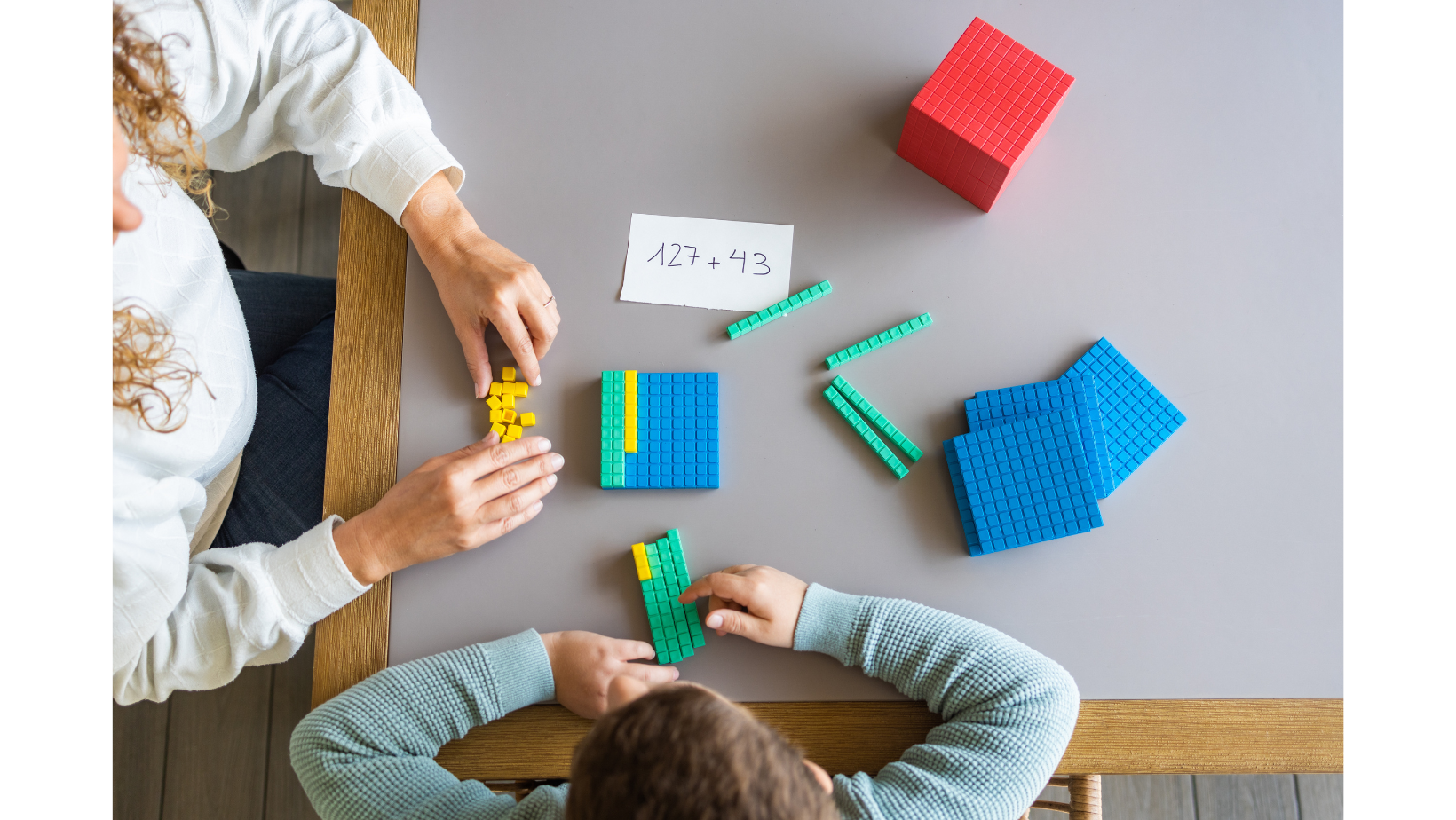
Show dot cards, rekenrek pictures, or ten frames for a few seconds. Students describe what they saw and how they knew.
- Upper Elementary Extension (Grades 3–6): Use:
- Base-10 block arrangements
- Fraction models (e.g., area models or strips)
- Decimal grids (e.g., 100 squares with partial shading)
Students mentally estimate or calculate the value and describe strategies.
By gradually increasing the complexity of these routines, you’re helping older elementary students build flexible thinking, mathematical reasoning, and conceptual understanding—all through short, daily routines that require little prep.
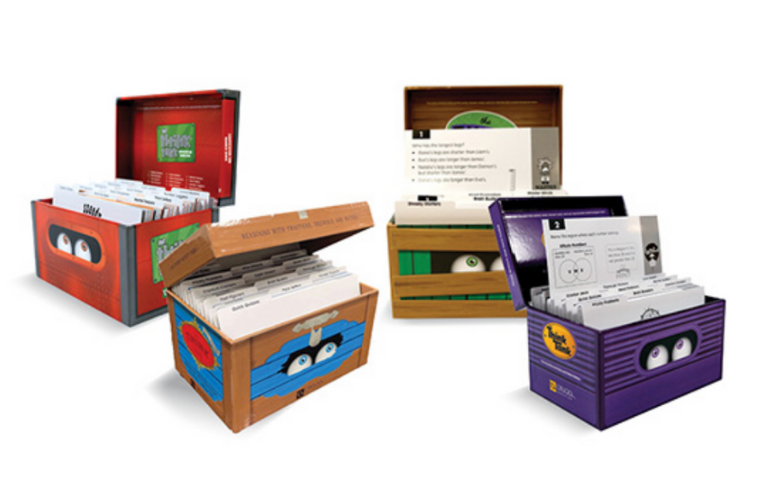
4. Think Tanks from ORIGO
ORIGO’s Think Tanks are inquiry-based challenges that spark higher-order thinking. These are fantastic to use as extended warm-ups once students are familiar with routines. They promote reasoning, discussion, and multiple solution paths.
Tips for Making Math Warm-Ups Engaging and Meaningful
Keep it short and consistent
Warm-ups should be no more than 5–10 minutes. Same time, same structure every day helps students settle in and know what to expect.
Encourage talk and reasoning
Use prompts like:
- “How do you know?”
- “Can you explain it in a different way?”
- “Do you agree or disagree?”

Celebrate different strategies
Post student thinking, highlight unique ideas, and avoid rushing to the “right” answer. The goal is flexible thinking!
Mix it up, but with structure
You don’t need a brand-new activity every day. Rotate 3–4 warm-up routines that students become familiar with over time.
Low-Prep Math Warm-Up Resources
Looking for ready-to-go warm-ups? Try these:
- ORIGO Think Tanks – Inquiry-based tasks for deep problem-solving
- ORIGO One Videos – Short, visual explanations of core math concepts
- Esti-Mysteries by Steve Wyborney – Fun, visual estimation challenges (FREE!)
- Daily Math Review Slides – Create a Google Slides deck with rotating warm-up prompts for easy display

Set the Tone for a Year of Math Growth
Planning your math warm-ups in the first weeks of school is one of the best things you can do to:
- Build trust in the math classroom
- Establish consistent routines
- Strengthen number sense from the start
With support from ORIGO Education, you don’t have to reinvent the wheel to get started. Focus on rich thinking, student voice, and joyful problem-solving, and you’ll lay the groundwork for a confident group of math learners.

 1-888-674-4601