


 1-888-674-4601


Insights
Setting Math Goals with Students: Helping Learners Identify Their Strengths and Growth Areas
Setting math goals with students can be a powerful way to shift their mindset about learning. Rather than seeing math as something that just “happens to them,” students begin to recognize their own role in building skills, deepening understanding, and celebrating progress. This sense of ownership fosters motivation and helps learners view challenges as opportunities to grow.
When teachers integrate goal setting into classroom routines, it not only gives students a clearer picture of their strengths and areas for improvement, but also creates a culture of reflection and growth. With the right strategies and resources, math goals can move beyond being just words on paper—they can become living, motivating tools that support daily learning and long-term confidence.

Unlocking Potential Through Purposeful Math Goals
Goal-setting shifts math learning from something that happens to students into something they actively participate in. Research shows that when students are involved in setting their own goals, they:
- Develop a stronger growth mindset and persistence.
- Build self-awareness of their math skills.
- Feel more motivated because goals are personally meaningful.
- Celebrate progress in authentic ways, not just with grades.
For example, instead of saying, “I want to get an A on my math test,” a student might set a more focused, growth-oriented goal like, “I want to use multiplication facts more quickly without counting on my fingers.” That kind of clarity makes progress easier to track and celebrate.

Step 1: Helping Students Identify Strengths
The first step in goal-setting is helping students recognize what they already do well. Too often, learners focus only on what they can’t do in math, which lowers their confidence. By highlighting strengths, you set a positive foundation for growth.
Classroom Ideas:
- K–2: Use a math “strengths chart” where students draw or write something they feel good about, like counting to 100, using math vocabulary, or solving a story problem.
- Grades 3–4: Incorporate quick self-reflection after math lessons. For instance, after a fractions activity, ask students to rate how confident they felt using models versus solving equations.
- Grades 5–6: Encourage deeper self-analysis with more challenging tasks, such as problem-solving. Once students are done, they can discuss which strategies felt strong and which areas they want to grow in. Try ORIGO’s Think Tanks to let students stretch their problem-solving abilities.

Step 2: Identifying Growth Areas
Once students have recognized strengths, it’s time to focus on areas for growth. The key here is framing challenges positively—as opportunities rather than weaknesses.
Strategies for Growth Identification:
- Use student work as a mirror. Reviewing math journals, exit tickets, or assessments gives students concrete evidence of areas where they can improve. ORIGO’s Student Journals make this process seamless. As a component of the core curriculum, Stepping Stones 2.0, the Student Journal encourages students to reflect regularly on their math thinking.
- Turn mistakes into insights. Highlight “favorite mistakes” from class and talk through what they reveal. This normalizes errors and helps students spot where they might set a new goal.
- Offer choice. Allow students to select which skill to focus on. This autonomy motivates them to invest in their goals.

Step 3: Setting Clear Math Goals
Not all goals help students in the same way. To be useful, math goals should be clear and doable, so kids know exactly what they are working toward and when they’ve met it.
For example:
- Instead of: “Get better at multiplication.”
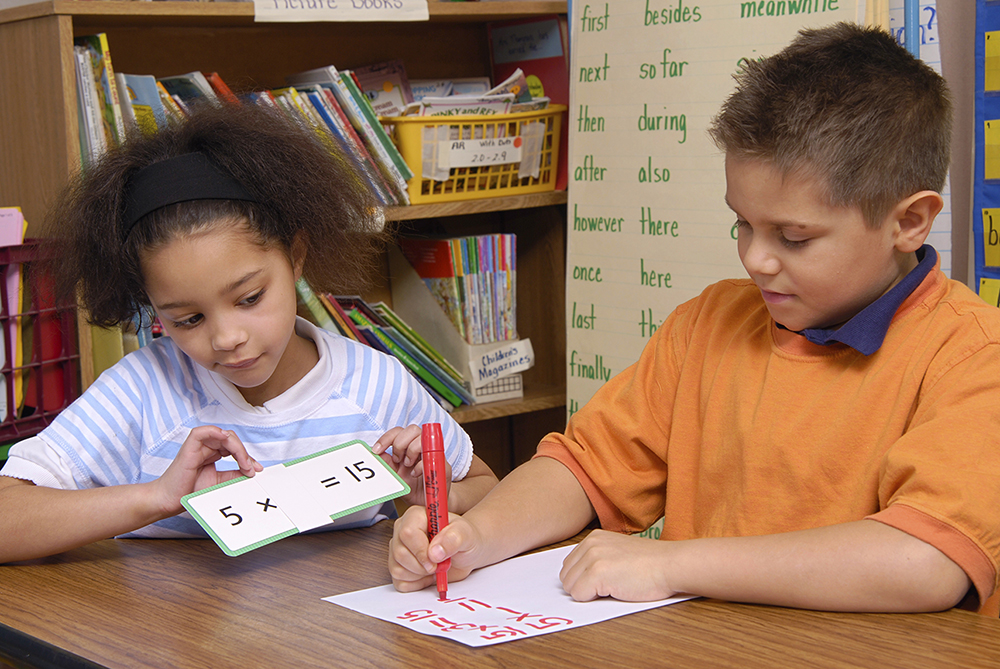
- A clearer goal might be: “By the end of the month, I will practice my 6, 7, and 8 multiplication facts until I can answer them quickly without looking at the number line.”
OR
- Instead of: “I want to get an A on my test.”
- A clearer goal might be: “This week, I want to make fewer mistakes with my multiplication facts than I did last week.”
How ORIGO Helps:
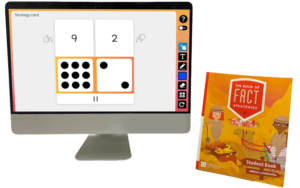
- In early grades, Number Case manipulatives provide hands-on practice for building fluency goals around addition and subtraction. The Book and Box of Fact Strategies is also a great way to help students reach math goals while having fun!
- For upper elementary, Mathementals short practice sessions (just 5 minutes a day!) give students quick opportunities to work toward their fact fluency goals in a low-pressure way. Also, ORIGO’s Fundamentals contains over 200 digital games to help young learners revisit and practice important skills.

Step 4: Monitoring Progress Together
Goals are most powerful when progress is tracked consistently. Students need opportunities to check in, reflect, and adjust their goals as they grow.
Ideas for Tracking Progress:
- Goal notebooks or math journals: Students record their goals, evidence of progress, and reflections. ORIGO’s Student Journals are an excellent fit here, which are already integrated into the Stepping Stones curriculum.
- Peer check-ins: Pair students to discuss what’s working and what’s still challenging.
- Teacher conferences: Short 1:1 conversations help keep goals on track.
By using visible tracking tools—like sticker charts for younger learners or self-assessment rubrics for older students—you reinforce the idea that growth is a journey.

Step 5: Celebrating Growth
Celebrating goals (whether fully achieved or in progress) reinforces effort and resilience. It’s not just about the end result—it’s about honoring the learning along the way.
Celebration Ideas:
- Spotlight boards where students post their goals and add stars when they reach milestones.
- Math reflections where students share aloud how they worked toward their goals.
- Class celebrations (like a “math growth party”) to acknowledge collective effort.


Resources like ORIGO’s Big Books and Think Tanks can also be used to revisit earlier content and show how much stronger students have become over time. ORIGO’s Big Books help to make abstract math concepts visual and story-based, helping even the youngest learners identify skills they’re confident in.

Bringing It All Together with ORIGO Stepping Stones 2.0
All of these strategies—strength identification, growth focus, clear goals, and progress tracking—fit naturally into ORIGO’s Stepping Stones 2.0 curriculum. Each lesson includes opportunities for reflection, problem-solving, and goal-setting, helping teachers embed these practices without adding “one more thing” to their plate.

For example, a fractions unit might begin with students reflecting on their current strategies, setting a goal to use models more effectively, and checking in with their progress through interactive practice in Fundamentals. By the end of the unit, students can look back at their journals and see how far they’ve come—both in confidence and skills.

When students set math goals, they shift from passive participants to active learners. They begin to see themselves not just as kids “doing math,” but as mathematicians developing strategies, perseverance, and self-awareness.
As educators, we have the opportunity to guide that process—and with ORIGO Education’s resources, you can be equipped with the tools to make it meaningful, engaging, and sustainable.
By starting small, celebrating progress, and fostering reflection, we can help every child discover their strengths and embrace new growth in math.

 1-888-674-4601