


 1-888-674-4601


Insights
Gamifying Your Math Block — Turning Goals and Skills Into Friendly Challenges
Gamifying your math block is a practical way to boost motivation, build fluency, and make standards-based practice feel fresh for K–5 students. The idea isn’t to replace strong instruction — it’s to wrap clear learning goals in playful challenges so students practice more, talk more about math, and get ongoing feedback. Below is a friendly, teacher-ready guide with research you can share with colleagues, grade-specific game ideas, and ORIGO Education resources that map neatly onto a gamified approach.
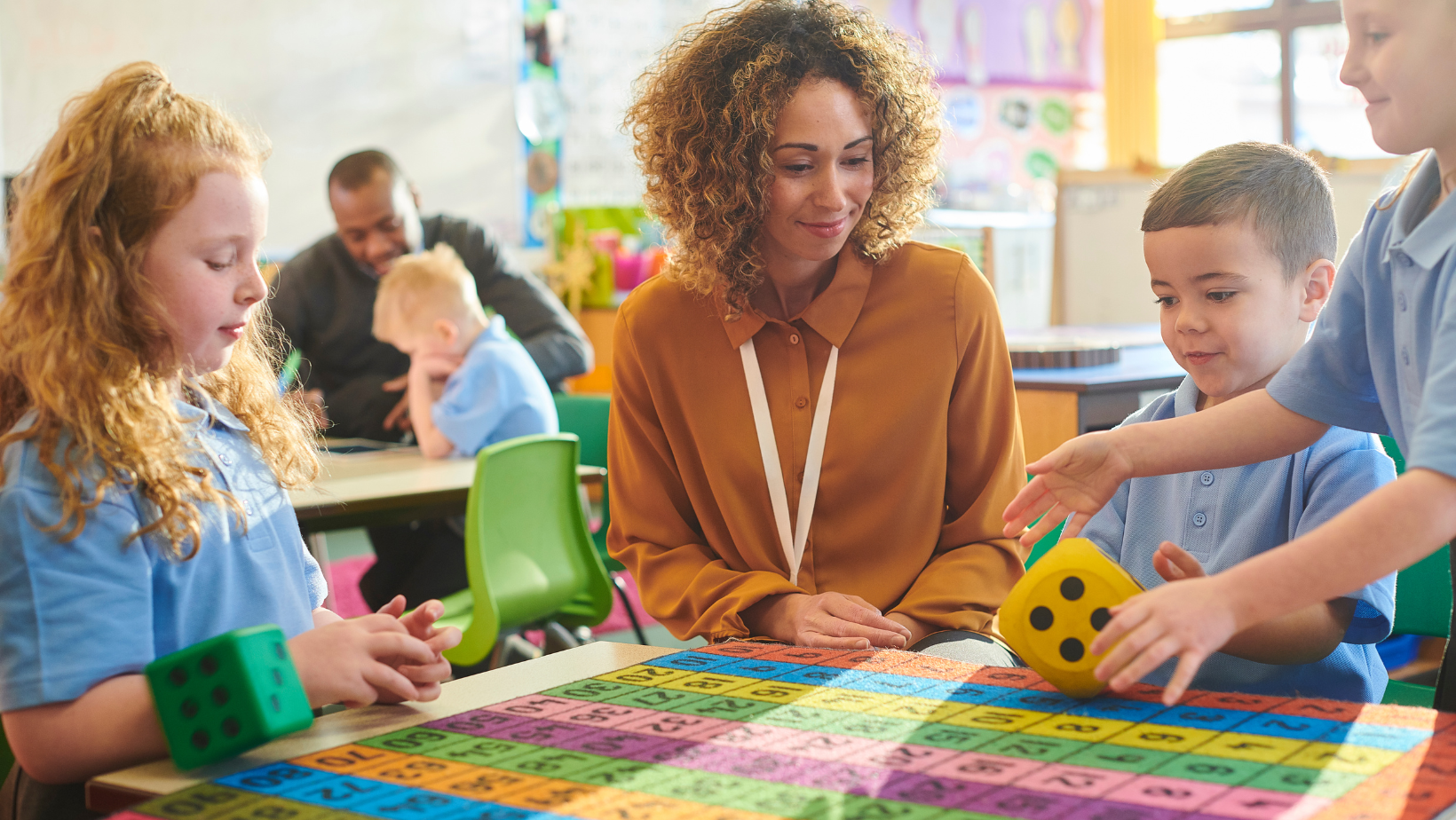
The Power of Play in Early Math
Research shows that game-based and play-based approaches support cognitive skills, engagement, and motivation in early mathematics. Systematic reviews and meta-analyses find moderate-to-large positive effects of game-based learning on cognitive outcomes (problem-solving, attention) and on student engagement — which matters because engaged students practice more and develop stronger number sense.
In other words, games are not just “fun extras.” When aligned to a clear learning objective and paired with teacher feedback, they become powerful tools for repeated practice, formative assessment, and encouraging mathematical talk.

How to Design Short, Effective Math “Challenges”
- Pick one clear learning target. (e.g., “add within 20 using strategies” or “identify fractions on a number line.”)
- Set a measurable goal. Students earn points, stars, or progress tokens for evidence of the target (correct solution + explanation, or improvement from previous attempt).
- Keep rounds short (5–12 minutes). Small wins build momentum and allow multiple rotations during a block.
- Use badges/levels for mastery. Create Level 1 → Level 3 tasks that increase in complexity; students “level up” when they demonstrate fluency or strategy use.
- Embed reflection. End with a 1–2 minute quick-share: “One strategy I used…” or “I want to get better at…”
This structure supports targeted teaching during your teacher-led small group while other students practice, review, or extend skills through games.
Grade-specific Game Examples
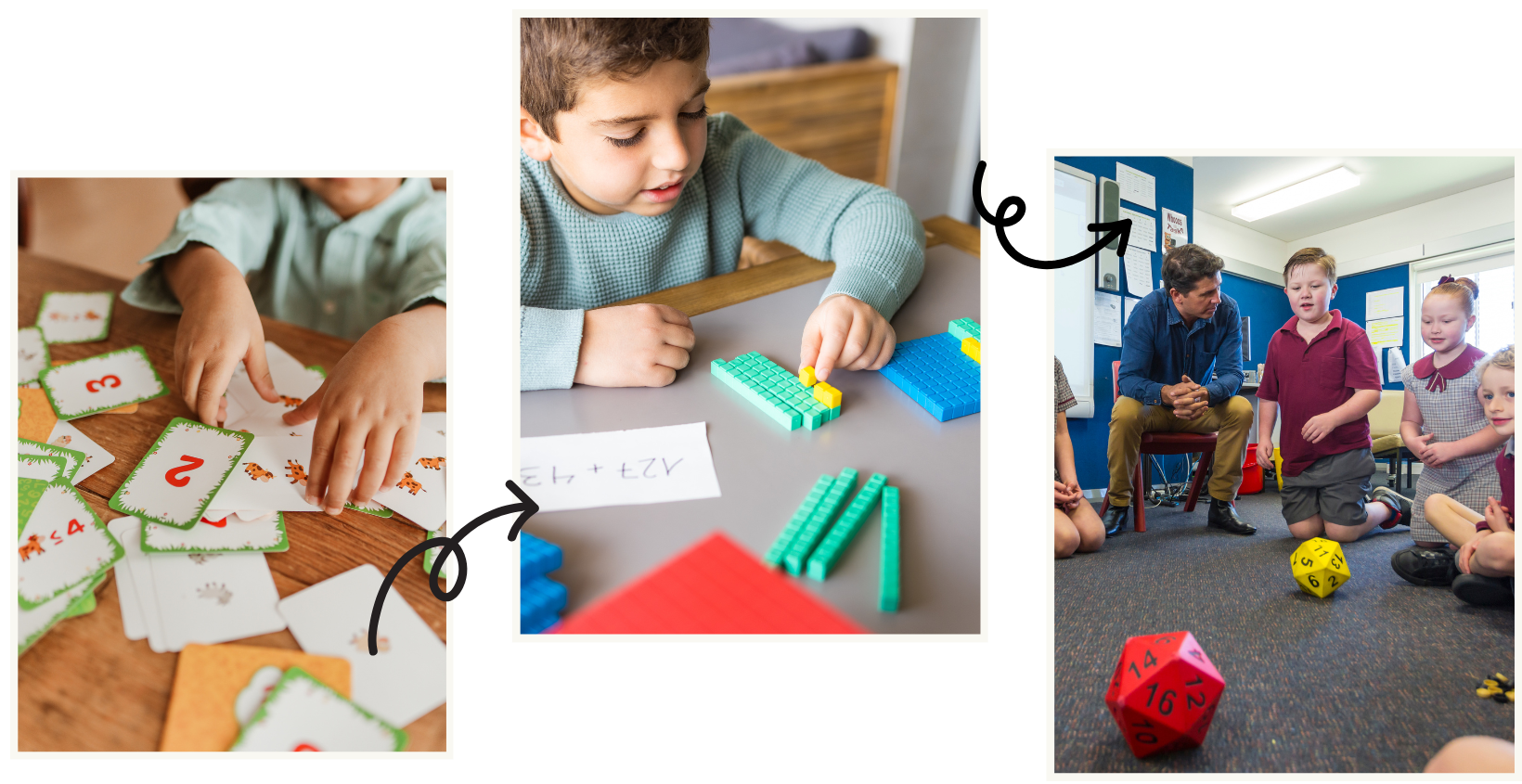
Kindergarten–Grade 2: Number sense & early facts
- Dot Dash (Subitizing sprint): Hold up dot cards for 2–4 seconds. Students write the quantity and one way to make it (e.g., 4 = 2+2). Award a point for correct quantity + explanation.
- Build-a-Number Relay: Small teams race (calmly!) to build a target number with manipulatives (ten frames, counters) and show two ways to represent it. Rotate roles so every child practices.
- Make-10 Match: Students flip two cards and try to make 10 with counters; first to show a correct representation gets a token — collect tokens for a class celebration.
Grades 3–4: Facts, multiplication thinking, and problem solving
- Array Challenge: Timed rounds where partners create arrays for target products and then write the matching multiplication and division sentences. Points for speed and explanation.
- Fact Family Triathlon: Three quick stations (multiply, divide, missing factor) — students record results on a race card; earn badges for accuracy across all three.
- Think-Its (short open tasks): Present a 2–3 minute “mystery” problem (e.g., “Find two numbers that make 48 and explain.”). Students earn strategic-thinking points rather than only correct answers.
Grades 5: Fractions, decimals, and higher-level strategies
- Fraction Number Line Quest: Students place fraction cards on a large number line and justify placements. Teams score for accuracy and clarity of reasoning.
- Decimal Race with Money: Create real-world purchase problems; students compute totals and change, earning “coins” they bank toward an in-class reward.
- Strategy Spotlight: Weekly, each student demonstrates one strategy (e.g., fraction decomposition) in a 60–90 second mini-showcase to earn “strategy stars.”
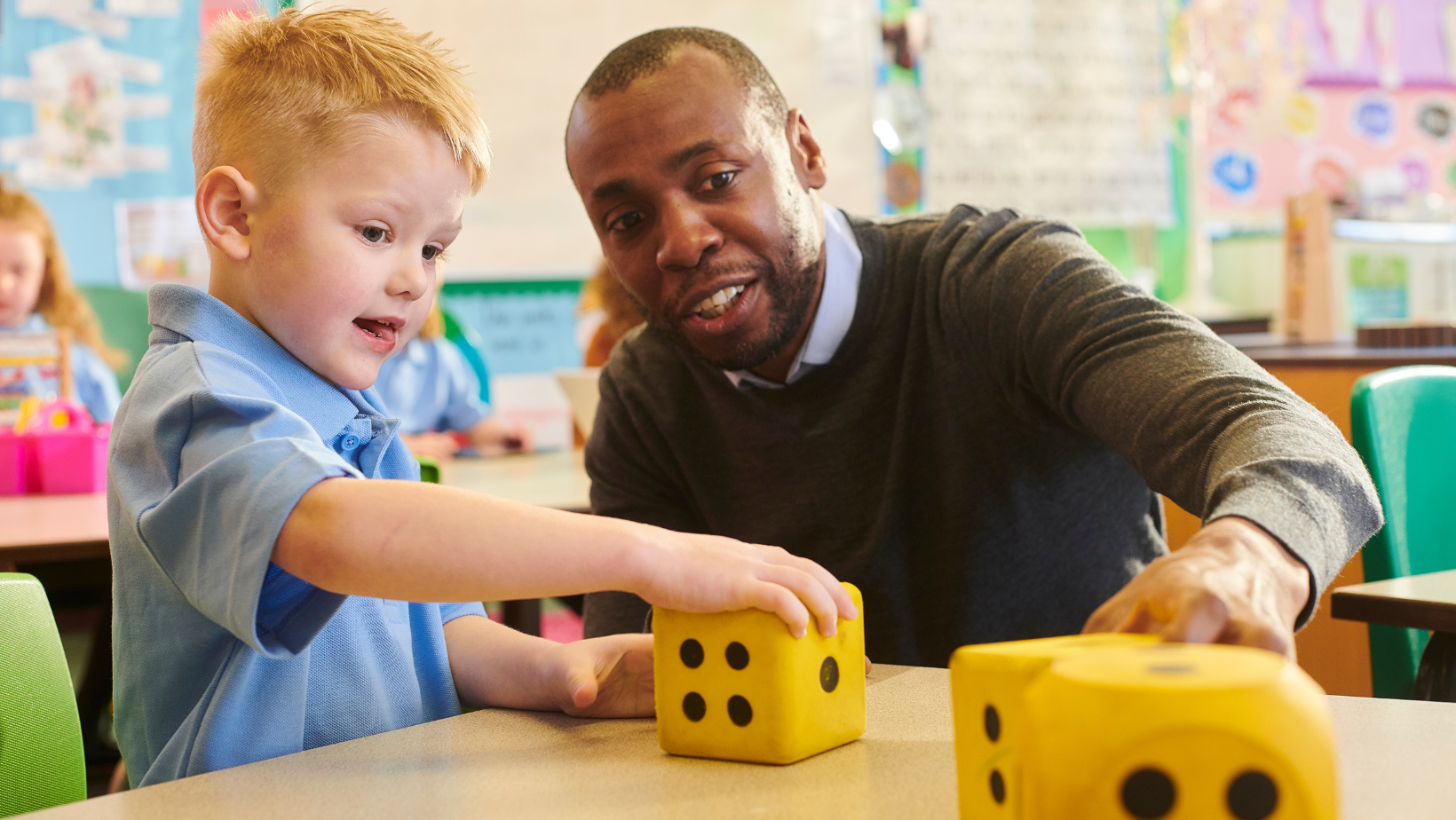
Quick Classroom Management Tips for Gamifying Your Math Block
- Routines first: Teach the game procedure in whole group, then practice transitions. Use timers and clear roles (materials manager, scorekeeper, explainer).
- Low-prep options: Use decks of number cards, dice, ten-frames, or digital practice for quick stations.
- Keep it low-stakes: Emphasize effort and strategy; score for explanation and strategy use, not only speed.
- Differentiate through choice: Offer “easy/harder” lanes within the same game so students pick a level that challenges them.
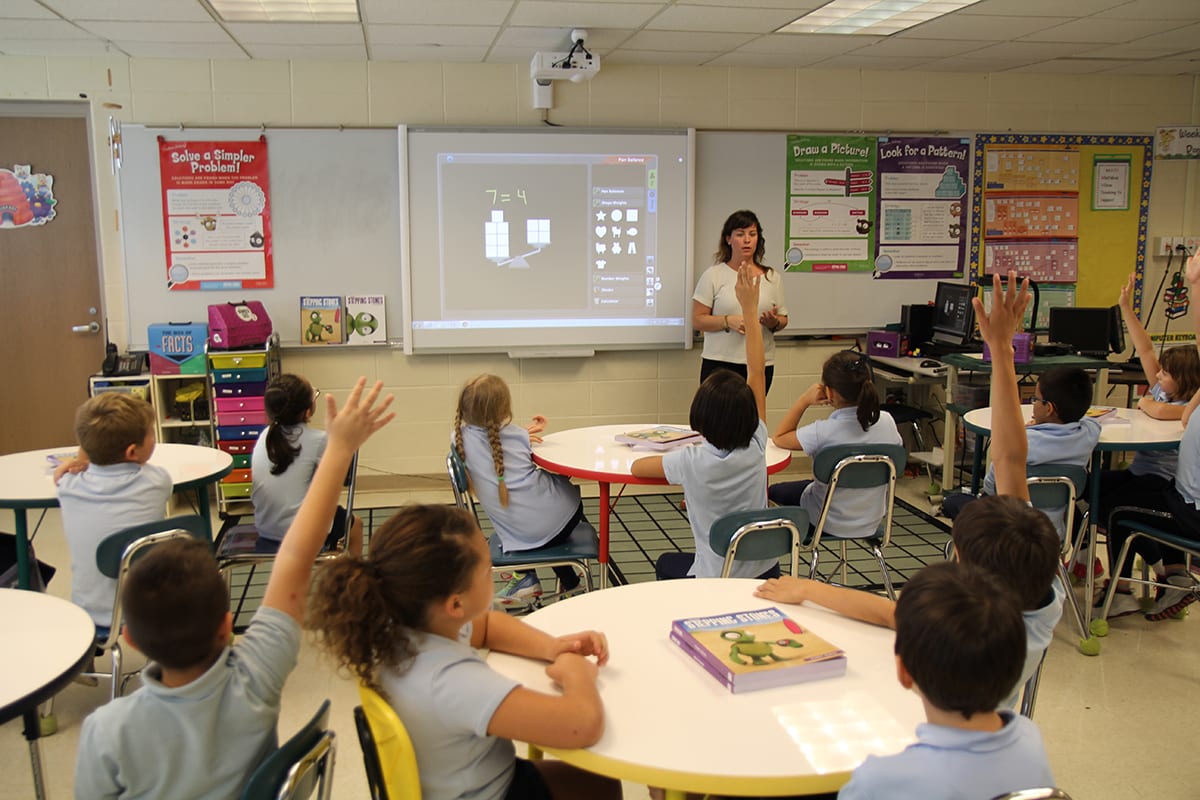
Teacher Using ORIGO Education Stepping Stone’s Curriculum
ORIGO Education Resources Pair Well with Gamified Instruction
ORIGO offers a number of teacher-ready products and free materials that map directly to a gamified math block:
- Fundamentals (Fundamentals of Math / Fundamentals books): A collection of 200+ classroom math games suitable for pairs and small groups — perfect for quick rotation stations and fluency practice.
- Mathementals / Mathementals sets: Year-level warm-ups and practice games that build mental computation with reproducible masters — ideal for timed rounds or “workout” stations.
- Think Tanks: Sets of scaffolded task cards (open-ended problems) that make terrific challenge cards for higher-level rounds or “level-up” tasks. Think Tanks are great for promoting reasoning and discussion during game rotations.
- Games & Activities Book (free download): ORIGO’s free games book offers printable, classroom-ready activities to launch stations immediately—handy for teachers who want low-prep, standards-aligned games.
If you already use ORIGO curriculum pieces (Stepping Stones, Fundamentals), slot these resources into your rotation plan: fundamentals for fluency stations, Think Tanks for challenge stations, and Mathementals for warm-up/game rounds.

Assessing learning inside a game-based block
- Use quick exit slips tied to the target. A short prompt after a game (one question + one sentence explanation) gives immediate data for grouping.
- Keep a level-up checklist to track when students demonstrate mastery across rounds.
- Record strategy notes during teacher-led sessions — award strategy badges to student portfolios.
Gamifying your math block doesn’t require a classroom overhaul — it’s about wrapping clear targets in short, spirited challenges that invite practice, conversation, and reflection. Start small (one game station, one weekly challenge), align it to a learning target, and use badges or levels to celebrate growth.
The result: more practice, richer math talk, and students who see themselves as capable math learners.

 1-888-674-4601