


 1-888-674-4601


Insights
Inquiry-Based Learning in Action with ORIGO Think Tanks
As math educators, we know that getting the correct answer is only part of the learning; understanding how and why it works matters just as much. We want students to think mathematically—to reason, make connections, explain their ideas, and apply what they know in meaningful ways. This is where inquiry-based learning plays a powerful role.
Inquiry-based learning places students at the center of the learning process. Rather than being told how to solve a problem, students are encouraged to explore, question, and reason their way to understanding. When implemented intentionally, inquiry-based instruction helps deepen conceptual understanding, strengthen problem-solving skills, and build confident mathematicians from kindergarten on.
At ORIGO Education, inquiry is not an add-on—it is embedded into the design of instructional resources. One of the most impactful examples of this commitment is ORIGO Education’s Think Tanks, which provide structured, purposeful opportunities for students to engage in rich mathematical thinking every day. These experiences are especially powerful in elementary classrooms, where inquiry plays a critical role in how students build understanding.

The Importance of Inquiry-Based Learning in K–5 Math
Inquiry-based learning in mathematics is grounded in a simple but powerful idea: students learn best when they actively make sense of mathematics for themselves. Instead of beginning with rules or procedures, inquiry-based lessons begin with a task or problem that invites exploration.
For young learners, this approach is especially important. Young students are naturally curious, and inquiry-based learning leverages that curiosity by encouraging them to notice patterns, test ideas, and talk about their thinking. This process helps students build understanding that goes beyond memorization.
When students engage in inquiry-based math learning, they:
- Develop conceptual understanding, not just procedural fluency
- Learn to explain and justify their thinking
- See multiple strategies and representations
- Build perseverance and confidence
- Understand why math works, not just how

How Inquiry Deepens Mathematical Understanding
Inquiry-based learning deepens understanding because it asks students to engage in the same practices mathematicians use: questioning, reasoning, modeling, and problem-solving.
Rather than receiving information passively, students:
- Interpret problems
- Make decisions about strategies
- Represent their thinking visually and symbolically
- Reflect on whether their solutions make sense
This approach encourages productive struggle, allowing students time to think, try, and rethink before reaching understanding. In math, those moments are valuable—they help students develop perseverance and a positive mindset toward learning.
Importantly, inquiry-based learning does not mean a lack of structure. Effective inquiry is carefully designed and guided by the teacher. Tasks are purposeful, questions are intentional, and discussion is structured to help students make connections between ideas.
This balance of structure and exploration is exactly what ORIGO Education Think Tanks are designed to provide.

Bringing Inquiry to Life with ORIGO’s Think Tanks
ORIGO Education’s Think Tanks are thoughtfully designed collections of inquiry-based math problems that support deep thinking across grade levels and mathematical strands. Although they are a limited range of choices, they offer students regular opportunities to engage in meaningful problem-solving while giving teachers the tools they need to guide learning effectively.
What Are Think Tanks?
Think Tanks are problem-solving resources organized by grade level and mathematical focus. Each Think Tank encourages students to reason, explain, and apply their understanding—key elements of inquiry-based learning.
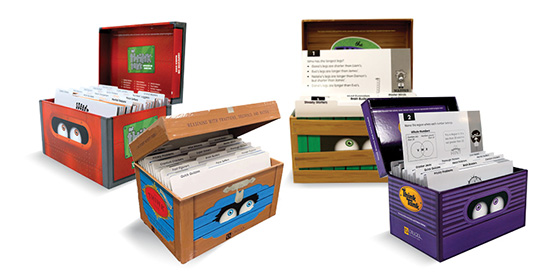
Each grade level includes three Think Tank sets, and every box contains:
- 240 laminated problem cards
- English and Spanish language on each card
- A reproducible student progress chart
- Key problems for student portfolios
- Teacher notes to support facilitation
- Answer cards for reflection and feedback
This structure makes Think Tanks flexible enough for whole-class discussion, small-group instruction, math centers, intervention, or enrichment.
Think Tanks That Support Inquiry Across Math Strands
ORIGO Education offers several Think Tank collections, each aligned to essential areas of elementary mathematics.
The Think Tank: Thinking Mathematically and Problem-Solving
This Think Tank enables students to develop and apply problem-solving skills across five mathematical strands:
- Number and operations
- Algebra
- Geometry
- Measurement
- Statistics and probability
Problems are intentionally designed to require reasoning, not rote computation. Students must analyze information, choose strategies, and explain their thinking—hallmarks of inquiry-based learning.
The Think Tank: Computation and Number Sense
This collection focuses on strengthening mental math, reasoning, and numerical relationships. Instead of repetitive drills, students explore how numbers work together and why certain strategies are efficient.
Through inquiry, students begin to see computation as connected and flexible, building fluency that is grounded in understanding rather than memorization.

NEW: Reasoning with Fractions Think Tanks
Fractions are often one of the most challenging areas of elementary math, and inquiry-based learning is especially powerful here.
- The Think Tank: Reasoning with Fractions (Grades 1–3) builds foundational fraction concepts while reinforcing early operational thinking with fractions, decimals, and ratios.
- The Think Tank: Reasoning with Fractions and Decimals (Grades 4–6) extends this work, helping students connect multiple representations and reason about fractional relationships more deeply.
These Think Tanks encourage students to compare, justify, and make sense of fractions—skills essential for long-term success in mathematics.
The Think Tank: Measurement and Geometric Thinking
This collection focuses on attributes, measurement, and geometric reasoning. Students engage with visual and spatial tasks that require them to analyze shapes, compare attributes, and reason about measurement concepts.
Inquiry-based tasks in this Think Tank help students move beyond naming shapes or measuring objects to understanding why attributes and relationships matter.

What Inquiry Looks Like in Action: Think Tank Examples
Think Tanks bring inquiry-based learning into the classroom through carefully designed tasks that invite multiple strategies and explanations.
Grade 1 Example

Students are asked to place counters on pairs of numbers that add to 10, with one number left unused. This task builds number sense and encourages students to explore combinations, notice patterns, and explain why certain pairs work—perfect for early inquiry-based learning.
Grade 2 Example

Using a set of clues, students figure out the correct order of names. This activity builds spatial reasoning, helps them notice patterns, and develops an understanding of relative position—all key skills in measurement and geometric thinking.
Grade 3 Example

Students are given a story problem with missing information and a set of numbers. Their task is to determine which numbers best complete the story to answer the question.
This type of inquiry requires students to:
- Interpret context
- Reason about quantities
- Justify their choices
Grade 4 Example

Students are shown five representations:
- An image of 3 out of 4 apples shaded
- The fraction 3/4
- The decimal 0.34
- A number line with 3/4 marked
- A 10×10 grid with 75 squares shaded
Students must decide which representation does not belong and explain their reasoning. There is no single “right” path—students must analyze relationships between fractions, decimals, and visual models, making this a rich inquiry task.
Grade 5 Example

Given a known and unknown portion of a hundred chart, students fill in the missing numbers. This activity helps them recognize numerical patterns, understand number relationships, and strengthen their sense of place value.
Grade 6 Example

Given the top, front, and left side views of a stack of cubes, students are asked to determine which stack matches all three views.
This activity strengthens spatial reasoning, helps students visualize three-dimensional shapes from multiple perspectives, and develops geometric thinking skills essential for understanding attributes, relationships, and spatial measurement.
For sample cards from the Think Tank series, click here!

How Think Tanks Support Deep Understanding
Think Tanks align seamlessly with inquiry-based instruction because they:
- Encourage multiple solution paths
- Require explanation and justification
- Support discussion and reflection
- Build understanding across representations
- Promote student ownership of learning
Teachers are supported with notes and answer cards, allowing them to guide inquiry intentionally without removing the cognitive demand from students.
Inquiry-based learning invites students into mathematics as active thinkers and problem-solvers, rather than passive learners. With frequent opportunities to explore, reason, and explain, students begin to make sense of math in deeper, more meaningful ways—and their confidence grows along the way.
ORIGO Education Think Tanks make it easy to bring inquiry-based learning into K–5 classrooms. Through engaging problems and built-in supports, these resources help teachers foster thoughtful, curious mathematicians—one rich task at a time.

 1-888-674-4601