


 1-888-674-4601


Insights
Curiosity in Math Learning: Encouraging Questions, Not Just Answers
If you teach elementary math, you don’t need anyone to tell you that students ask questions. Lots of them. Rapid-fire, half-formed, wonderfully honest questions that start with why, what if, and how come. Curiosity is already alive in your classroom — the real challenge is what happens to it once the math lesson begins.
Somewhere between pacing guides, standards, and the pressure to build fluency, those natural questions can get unintentionally sidelined. Not because teachers don’t value curiosity, but because time feels tight and answers feel urgent. The good news? You don’t need to create curiosity in your math block. You just need to channel it into meaningful learning.

Curiosity Fuels Deeper Math Understanding
Elementary teachers know that when students are curious, they lean in. They try harder. They stick with problems longer. Curiosity fuels the kind of thinking we want — especially in math. It invites students to look for patterns, test ideas, and make sense of why strategies work, not just whether they do.
When curiosity is honored, math shifts from “Tell me the steps” to “Let me figure this out.” Students start to see math as something they can explore rather than something that’s done to them. That mindset matters just as much as the skills themselves, especially in the early grades when students are forming their identities as math learners.

The Real Issue Isn’t Questions — It’s What We Do With Them
Your students are already asking questions. The decision point comes next. Do we rush past them to stay on track? Do we answer quickly and move on? Or do we pause and let those questions drive the thinking?
Encouraging curiosity doesn’t mean turning every lesson into an open-ended exploration. It means being intentional about which questions we elevate. Simple shifts make a big difference:
- “That’s a great question — who has an idea?”
- “Let’s test that and see what happens.”
- “Can someone build on that thinking?”
These moves tell students that their questions have value — not just the final answer.

Designing Lessons That Make Space for Wonder
Some tasks naturally invite curiosity more than others. Open-ended problems, rich word problems, and visual prompts create room for students to notice, wonder, and ask questions without fear of being wrong. Try ORIGO’s Think Tanks!
Notice-and-wonder routines are especially powerful because they validate every learner from the start. There’s no correct response — only observations and questions. Whether students are looking at a pattern, a picture, or a set of numbers, they’re practicing the same habits mathematicians use: observing closely and asking meaningful questions.
And the best part? These routines don’t require extra time. They often replace the warm-up you’re already doing — just with more thinking and less guessing.

When Students Ask the Questions, They Own the Math
One of the most effective ways to keep curiosity alive is to let students generate questions themselves. This might mean asking them to write a math question to match a picture, create their own word problem, or challenge a solution strategy shared by a classmate.
In early grades, this can be as simple as, “What math question could we ask about this?” In upper elementary, students can craft multi-step problems or ask questions that require justification and reasoning. When students ask the questions, engagement skyrockets — because the problem belongs to them.

Curiosity and Skill Practice Can Coexist
Let’s be honest: curiosity doesn’t replace the need for practice. Students still need time with numbers, strategies, and fluency-building routines. The difference is how that practice is framed.
ORIGO Education’s curriculum and resources intentionally build space for discussion, questioning, and sense-making. Lessons are structured to surface student thinking first, using visual models, purposeful questions, and rich tasks that invite students to explain why a strategy works — not just how to use it.
When students understand why a strategy works — because they’ve explored it, questioned it, and tested it — practice becomes purposeful. Instead of asking, “How many more do we have to do?” students are more likely to ask, “Does this always work?” Curiosity gives practice meaning, and practice gives students confidence to explore further.
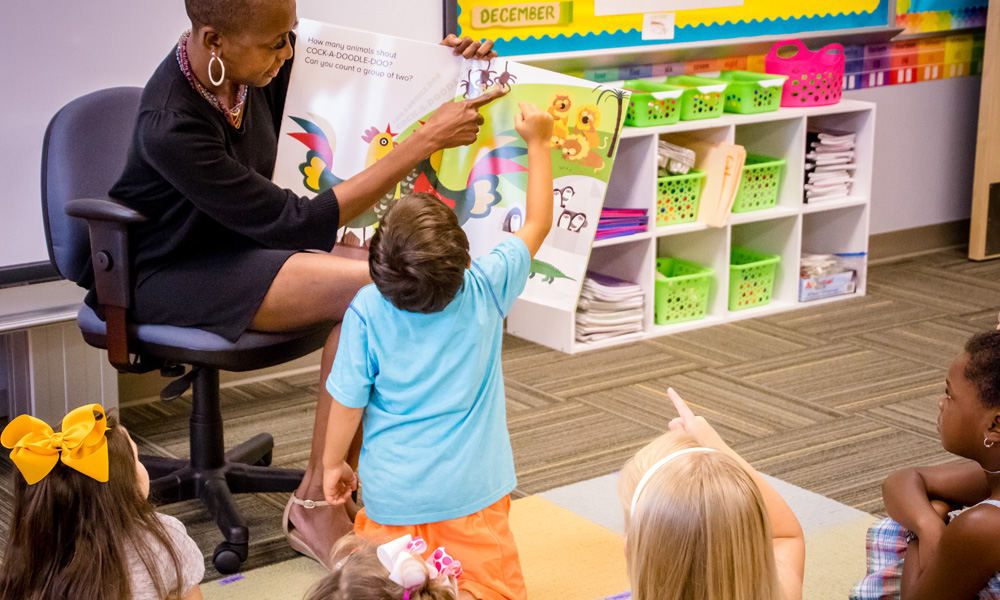
Protecting Curiosity in a Busy Math Block
You already know that curiosity shows up naturally in your classroom. The work is in protecting it — especially on busy days. That might mean letting a rich question linger for an extra minute, choosing discussion over speed, or valuing a thoughtful mistake more than a quick answer.
Resources like ORIGO’s Big Books, Fundamentals, and Mathementals naturally encourage students to notice patterns, ask questions, and compare strategies. These resources reinforce skills while still requiring reasoning, and formative assessment prompts help teachers respond to student questions in the moment. Instead of shutting down curiosity to “get through the lesson,” ORIGO’s coherent progression allows questions to become part of the learning process — supporting deeper understanding alongside fluency.
When we send the message that questions matter, students learn that math is about thinking, not just finishing. Over time, that message builds confident, capable learners who aren’t afraid to wonder, try, and revise their thinking.

Curiosity Is Already There — Let It Lead
You don’t need to teach students how to be curious. They come to you that way. By creating space for questions, honoring student thinking, and using curiosity as a tool rather than a distraction, you turn what students already do best into one of your strongest instructional assets.
And when curiosity leads the math learning, answers tend to follow — with understanding right behind them.

 1-888-674-4601