


 1-888-674-4601


Insights
Practical Strategies for Developing Algebraic Thinking in K–5
It comes as no surprise that integrating algebraic thinking in the early grades creates stronger math thinkers later on. Research consistently suggests that young learners benefit when algebraic ideas—such as relational reasoning, structural thinking, and the ability to generalize—are embedded into instruction long before formal algebra courses.
The question is, how can educators effectively help their young learners think “algebraically” before students are developmentally ready for algebra? The good news is for K–5 teachers, integrating early algebraic thinking may be as simple as intentionally building the foundational ideas, such as recognizing patterns, generalizing relationships, analyzing structure, and understanding equality.
When these habits are embedded into daily math instruction, they strengthen conceptual understanding and lay the groundwork for long-term mathematical success.

What Is Algebraic Thinking in the Early Grades?
Research indicates that engaging students in patterning and generalization activities, introducing simple functional relationships, and using multiple representations—such as diagrams, tables, number lines, and informal symbols—supports the development of early algebraic understanding. Furthermore, when instruction is connected to meaningful, real-world contexts, students are better able to make sense of relationships and structure, which increases both engagement and conceptual depth.
This means algebraic thinking in K–5 involves students’ ability to:
- Recognize and extend patterns
- Generalize relationships between quantities
- Understand equality as balance
- Analyze how one quantity changes in relation to another
- Represent mathematical relationships using models, diagrams, and tables
These skills grow from strong number sense and meaningful reasoning about operations. They develop through intentional learning experiences that emphasize relationships over rote procedures. When algebraic thinking is woven into everyday instruction, it becomes the lens through which students make sense of mathematics—not an extra unit to fit into an already full curriculum.
And when students consistently see mathematics as a connected system of relationships, they build the foundation that prepares them for the demands of higher-level math with confidence and clarity.

What Early Algebra Looks Like for Young Learners
Pattern Recognition and Description
In kindergarten, algebraic reasoning often begins with repeating patterns using concrete materials.
Example:
Red, blue, red, blue, red, blue
Rather than simply continuing the pattern, students should be encouraged to describe the structure:
- What is repeating?
- How do you know what comes next?
- Can this pattern continue indefinitely?
Describing the repeating unit moves students from copying to reasoning.
Growing Patterns

Growing patterns introduce systematic change.
Step 1: 1 square
Step 2: 2 squares
Step 3: 3 squares
Step 4: 4 squares
Organizing information in a table supports structural thinking:
| Step |
Number of Squares |
| 1 | 1 |
| 2 | 2 |
| 3 | 3 |
| 4 | 4 |
Students begin to recognize relationships between the step number and the quantity. This is foundational functional thinking.
Understanding Equality
A critical component of early algebra is developing a relational understanding of the equals sign.
Students should engage with equations such as:
7 + 2 = 8 + 1
5 + 3 = 2 + 6
6 + 4 = 8 + 3
Discussion should focus on whether both sides represent the same quantity and why. This reinforces equality as balance rather than a signal to compute.

Classroom Tasks That Promote Pattern Generalizing and Functional Thinking
1. “What Stays the Same? What Changes?”
Consider the sequence:
2 + 5 = 7
3 + 5 = 8
4 + 5 = 9
Teachers can ask:
- Which number stays the same?
- Which number changes?
- How does the total change?
- Will this always happen?
Students may generalize that increasing one addend by one increases the total by one. This reasoning strengthens understanding of addition structure.
2. Input–Output Relationships
Introduce informal function activities:
Rule: Add 2
Input → 3 → Output → 5
Input → 6 → Output → 8
Input → 10 → Output → 12
Students determine and test the rule, reasoning about consistent relationships between quantities.
3. Representing Relationships Using Tables
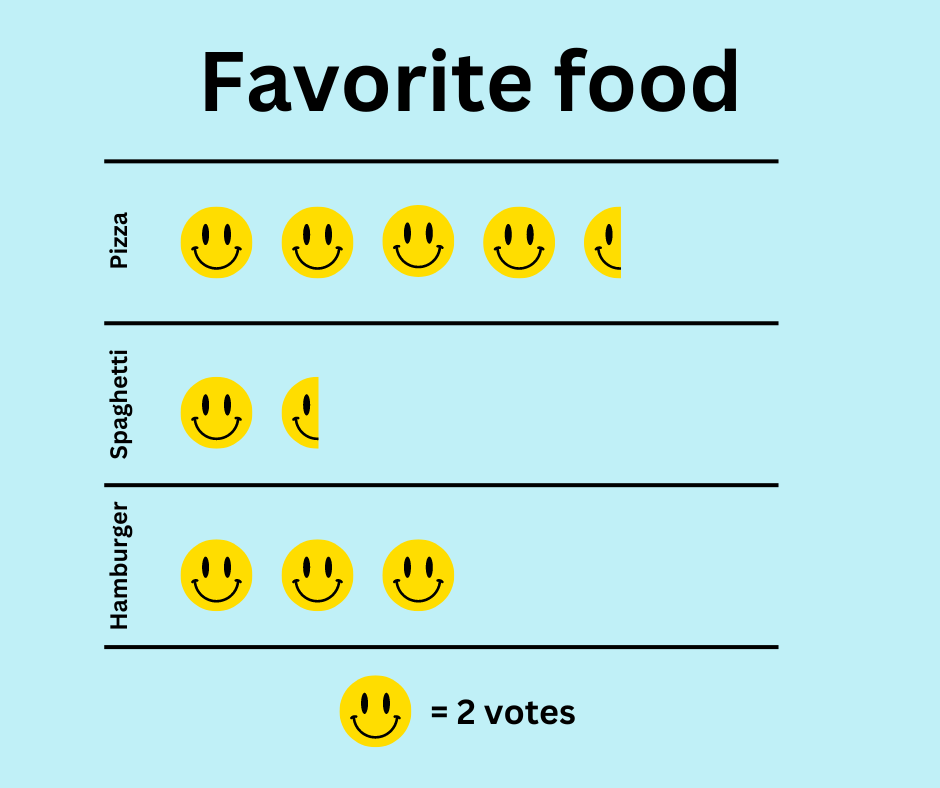
Organizing information in tables supports pattern recognition.
| Number of Groups | Total Objects |
| 1 | 4 |
| 2 | 8 |
| 3 | 12 |
Students identify the multiplicative or additive relationship between columns. This strengthens generalization skills.
Moving From Specific Examples to General Rules
A key goal of early algebra is helping students move from specific cases to general statements.
Instead of stating:
4 + 3 = 7
Students should be encouraged to articulate:
“When you add 3 to a number, the result is three more than that number.”
Teachers can support this shift by consistently asking:
- Does this always work?
- Why does this happen?
- Can you describe the pattern in words?
Verbal generalizations are foundational to later symbolic reasoning.

How Early Algebraic Reasoning Supports Later Problem Solving
Strengthened Number Sense
Students who understand number relationships reason flexibly:
If 8 + 7 = 15, then 18 + 7 = 25.
They recognize structure rather than recalculating each time.
Deeper Operational Understanding
Recognizing inverse relationships strengthens understanding:
If 9 − 4 = 5, then 5 + 4 = 9.
Comfort With Unknowns
Early experiences with missing numbers prepare students for formal equations:
☐ + 6 = 10
Students reason about part–whole relationships rather than guessing.
Improved Mathematical Communication
Algebraic thinking requires explanation and justification. When students talk about their thinking regularly, they build the mathematical vocabulary they need to tackle more complex, multi-step reasoning as they grow.
Supporting Early Algebra With ORIGO Education Resources
Intentional curriculum design plays a critical role in developing algebraic thinking. At ORIGO Education, we design resources that weave algebraic reasoning into everyday lessons instead of saving it for a later unit.
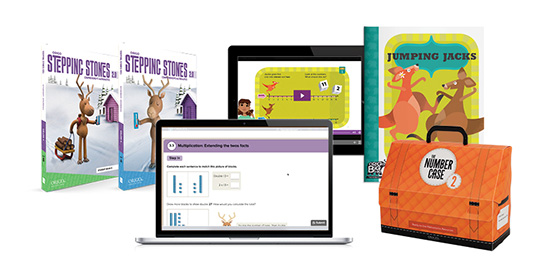
Stepping Stones 2.0
Our curriculum, Stepping Stones 2.0, integrates algebraic thinking throughout the K–5 curriculum. Rather than presenting algebra as a separate strand, the program embeds relational reasoning into number, operations, and pattern work.
Key features that support early algebraic development include:
- Structured Pattern Exploration
Students engage in both repeating and growing patterns across grade levels. Lessons encourage students to describe patterns, predict future elements, and explain relationships verbally and visually. - Emphasis on Equality and Number Sentences
Stepping Stones 2.0 includes varied equation formats (e.g., a + b = c and c = a + b), helping students build a relational understanding of equality early. - Visual Models and Representations
The curriculum uses visual tools such as number lines, arrays, ten-frames, and bar models to help students see structure in operations and relationships between quantities. - Guided Questioning
Teacher materials include purposeful questions that promote generalization:
- What do you notice?
- What changes?
- What stays the same?
- Will this always work?
These prompts move students from procedural thinking to structural reasoning.
- Coherent Progression Across Grades
Concepts introduced informally in kindergarten are revisited and deepened in later grades. For example, early pattern recognition develops into more formal functional relationships by upper elementary.
Additional ORIGO Education Resources
In addition to Stepping Stones 2.0, ORIGO Education offers supplemental tools that reinforce algebraic reasoning:
The set of task cards Thinking Mathematically and Problem Solving enables students to develop and apply problem-solving skills across five strands (number and operations, algebra, geometry, measurement, and statistics and probability.)
ORIGO Fundamentals
This collection of over 200 mathematical number games offers targeted practice aligned with core number relationships, helping students strengthen the structural understanding necessary for algebraic thinking.
ORIGO Games and Activities Book
Download our FREE games and activities book to help your students identify patterns and strategic connections in an interactive format.
ORIGO One (Digital Resources)
These short videos unpack key mathematical ideas and reinforce visual modeling and pattern exploration, giving students opportunities to manipulate representations and see relationships unfold dynamically.

Laying the Groundwork for Future Math Success
To effectively foster algebraic thinking:
- Integrate pattern work consistently across grade levels.
- Emphasize equality as balance.
- Encourage students to generalize verbally.
- Use visual models to highlight structure.
- Prioritize reasoning and explanation over answer-getting.
By weaving algebraic reasoning into everyday instruction—and using supportive resources like ORIGO Education’s Stepping Stones 2.0—teachers can nurture confident, capable mathematical thinkers. These early experiences strengthen number sense, encourage flexible problem solving, and help students see mathematics as a connected system rather than a collection of steps.
Developing algebraic thinking in K–5 isn’t about pushing students ahead—it’s about building them up. When we intentionally lay this foundation, we give students the clarity, confidence, and conceptual strength they need to thrive in the mathematics that lies ahead.

 1-888-674-4601