


 1-888-674-4601


Insights
Turning Exit Tickets Into Next-Day Instruction
One of the most powerful—but often underused—tools in your teaching toolkit is the humble exit ticket. When designed well, exit tickets can give you nearly immediate insight into student understanding. But what separates a good exit ticket from a GREAT one is what you do next with the data. How do you design responsive instruction the next day based on what students show you at the very end of class? In other words, how do you turn exit tickets into next-day instruction?

The Power of Exit Tickets
Exit tickets are short, focused prompts or problems given at the end of a lesson. Because they’re quick (often just 1–3 questions), they give you a snapshot of how students processed the day’s learning. That data is gold — it lets you:
- Catch misconceptions early
- Adjust pacing or reteach small groups
- Celebrate successes and build confidence
- Inform differentiation the next day
When you use exit tickets as more than a formality — when you genuinely let them drive your next-day moves — they become a bridge between what students think they learned and what they actually have mastered.

Choosing Exit Tickets That Give You Actionable Data
Not all exit tickets are created equal. If your goal is to feed directly into tomorrow’s instruction, here are design features to focus on:
- One key idea per ticket
Make each exit ticket target one specific concept (e.g. “Explain how you know that 36 is an even number.”) - Mix formats
Use short answer, multiple choice with reasoning, confidence rating (e.g. “on a scale of 1–3, how confident are you in this idea?”), or error analysis (students find and fix a mistake). Variety prevents predictability and surfaces different thinking paths. - Ask for reasoning, not just answers
For example: What was one thing you understood today? What is one question you still have? or Show your reasoning for your answer. - Time-limit them
Keep them brief (1–3 minutes). Students should feel the same familiarity they feel doing a quick check on their work — not stressed. - Collect them purposefully
Decide in advance how you’ll group responses (e.g. “needs reteaching,” “needs extension,” “good to go”). Use a simple system (sticky notes, colors, or bins) to sort responses quickly.
From Exit Ticket to Next-Day Instruction: A Six-Step Workflow
Here’s a simple process you can use to turn exit-ticket results into next-day instruction that truly responds to what students need:
- Review quickly
As soon as class ends (or during your prep time), skim through all of your students’ responses. Don’t overanalyze — just get a sense of what stuck and what didn’t while the lesson is still fresh in your mind. - Sort by response type
Group student work into broad categories such as “understands,” “partially understands,” and “needs reteach.” You can use sticky notes, bins, or a quick color-coding system to make this fast and visual. - Identify patterns and priorities
Look for common misconceptions or areas of confusion. If several students made the same type of error, plan to address that issue first thing the next day. - Adjust your warm-up or lesson opener
Begin the next lesson by revisiting the concept that caused the most trouble. This can be a short discussion, an error-analysis activity, or a quick reteach using a different model or representation. - Plan small-group or targeted support
Use the exit-ticket data to form flexible groups for the next day. Some students may need a brief reteach, while others are ready for an extension task. This ensures everyone moves forward from where they are. - Check for growth during the next lesson
Include a quick formative check partway through class (such as a mini problem, whiteboard response, or partner share). This confirms that your reteaching worked — and lets you pivot again if needed.
By building this cycle into your teaching routine, exit tickets become more than exit tickets — they become instructional pivot points.

Quick Tips for Smoother Use
- Schedule “response time.” Block a few minutes after class (or right before prep time) to sort and reflect.
- Use color coded bins for submitting exit slips. For example, green bin = “I’m confident or I could explain it to someone else,” yellow = “I think I understand,” red = “I’m not there yet/help please.”
- Don’t overreact to one tricky question. Focus on patterns rather than outliers.
- Save tickets for pre-post comparison. Over time, you can see growth or recurring trouble spots.
- Rotate the format. A “one-question reasoning” ticket one day; an error correction ticket the next keeps students alert.
ORIGO Education’s Built-In Supports
If you’re using—or considering—a comprehensive math program, ORIGO Education’s design already supports exit tickets and quick formative checks. Read more here about how exit tickets provide immediate feedback and help inform your next-day instruction.
Within ORIGO’s Stepping Stones 2.0, assessments and quick checks are embedded in lessons — so teachers don’t always have to design their own exit tickets from scratch. Stepping Stones includes “check-up” items, formative tasks, and assessment tools that align tightly with each lesson’s learning goals.
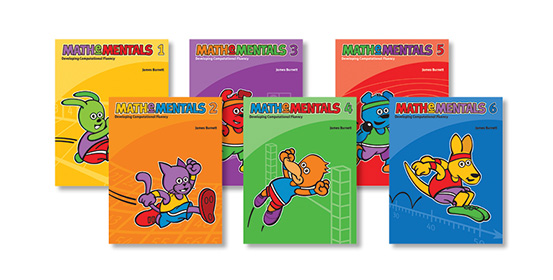
In addition, ORIGO resources, such as Mathementals, can be used as short exit-ticket style checks of foundational number skills — letting you monitor fluency alongside conceptual progress. (You can adapt them as exit tickets or quick fluency-checkers between lessons.)
Because these assessments are already aligned with the lesson content and the underlying progression, when you use ORIGO’s built-in checks or Mathementals as exit tickets, your next-day instructional moves become smoother and more precise.

Sample Scenario: From Exit Ticket to Better Instruction
Imagine you’ve just taught a lesson on fraction equivalence. Your exit ticket asks:
“Explain why 2/3 is equivalent to 4/6.”
You review and see:
- 5 students wrote “double numerator and denominator” (correct concept).
- 4 students wrote “I just memorized them as equivalent” (weak reasoning).
- 3 students gave incorrect or no explanation.
Your plan for tomorrow:
- Start with a 3-minute warm-up: show a pair of equivalent fractions and ask students to explain the reasoning, then solicit a few quick responses.
- Pull the 3 students with errors into a small group. Use manipulatives (fraction bars) to show equivalence, asking them guiding questions.
- For the 4 who memorized, encourage them to verbalize why doubling works (numerator and denominator both scale).
- For the rest, build a short partner talk: students explain to each other and then share their reasoning.
- Midway, do a quick check (“give me an equivalent of 3/5 and explain why”) to see who still needs support.
Because your exit ticket was well aligned and your next-day moves are precise, each student benefits from just-in-time support — and you avoid reteaching the full lesson to everyone.
Turning exit tickets into next-day instruction isn’t just a teaching trick — it’s a mindset shift. When we see exit tickets as the starting point for planning rather than the final step, we become more responsive to student needs and more intentional in how we teach. And with tools like ORIGO’s built-in assessments and resources, you don’t have to start from scratch. The ready-made assessment questions in Stepping Stones 2.0 make it easy to gauge understanding and guide your next instructional moves — keeping every pivot aligned with a coherent, well-designed math progression.

 1-888-674-4601