


 1-888-674-4601


Insights
Interleaving in Math Instruction: Why Mixing Problems Improves Learning
In many math classrooms, practice problems are typically organized in blocks. After a lesson on a particular skill—such as multiplication strategies or graphing—students complete a series of problems that all require the same method. This format feels intuitive. Students experience early success because they repeatedly apply the same strategy.
However, research from cognitive science suggests that another approach may lead to stronger long-term learning: interleaving.
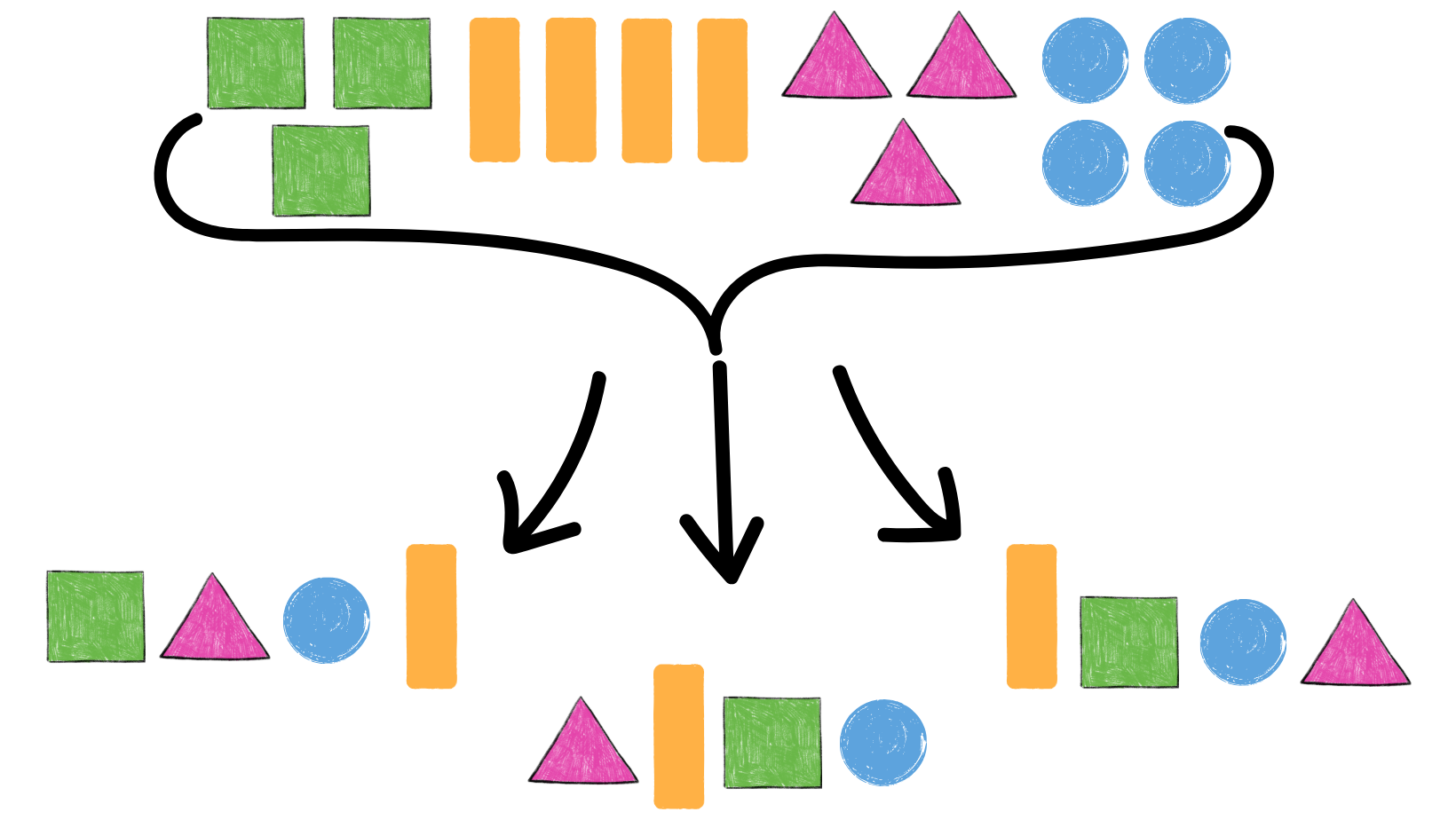
Interleaving involves mixing different types of problems together rather than practicing one type at a time. Instead of completing 10 similar problems in a row, students encounter different problem types within the same practice set. While this approach may initially feel more challenging for students, research shows that it can significantly improve learning and retention.
Understanding how interleaving works—and how teachers can implement it effectively—can help students build deeper mathematical understanding and stronger problem-solving skills.
What Is Interleaving?
Interleaving refers to arranging practice problems so that different concepts or strategies are mixed together rather than grouped by topic.
For example, a traditional worksheet might look like this:
- 8 problems using the distributive property
- 8 problems solving equations
- 8 problems involving area
In an interleaved practice set, those same problems might appear in a mixed order:
- distributive property
- area
- equation solving
- distributive property
- area
This structure requires students to analyze each problem and determine the correct strategy before solving it. In contrast, blocked practice allows students to assume the correct strategy based on the surrounding problems.
Research suggests that this process of identifying the appropriate strategy strengthens learning. When problems are mixed, students must engage in deeper reasoning rather than repeating a procedure. Studies of interleaved practice have shown substantial learning benefits. For example, in a study by Taylor and Rohrer, students who practiced mixed problem types scored more than twice as high on later tests (77% vs. 38%).

Why Interleaving Improves Learning
Although interleaving may initially feel more difficult for students, that difficulty can be beneficial. Cognitive scientists refer to this as desirable difficulty—learning tasks that require more effort often produce stronger long-term retention. Several factors help explain why interleaving improves mathematical learning.
Strategy Selection
When students complete blocked practice, they already know which strategy to apply. For example, if all problems involve fractions, the procedure is obvious. With interleaving, students must interpret each problem and decide which method to use. This mirrors the type of thinking required on assessments and in real-world problem solving. Researchers note that interleaving improves students’ ability to match problems with appropriate procedures—a critical skill in mathematics learning.

Spaced Practice
Interleaving also naturally creates spacing between similar problems. Instead of solving several problems of the same type consecutively, students encounter them across longer intervals. Spaced learning strengthens memory and retention because students must retrieve the strategy again after some forgetting has occurred.
Comparing Concepts
Mixed practice encourages students to notice differences between similar mathematical ideas. When students alternate between problem types, they must distinguish which features signal a particular method. This comparison helps students develop a clearer understanding of mathematical structure.

What Interleaving Looks Like in the Classroom
Interleaving does not require teachers to redesign an entire curriculum. In many cases, it can be implemented simply by rearranging practice problems.
Researchers have demonstrated that mixing problems from different lessons—without adding additional content—can improve learning outcomes.
Here are several practical ways teachers can structure interleaved practice.

Mix Previously Learned Skills Into Daily Practice
Rather than practicing only the skill introduced in the current lesson, include review problems from earlier topics.
For example, a Grade 4 practice set might include:
- multiplication facts
- multi-digit addition
- fraction comparison
- area models
This approach encourages students to recall strategies from earlier lessons and apply them in new contexts.
Use Short Mixed Review Sets
Short, mixed problem sets can be used at the beginning or end of a lesson. These sets help students revisit previously learned skills while strengthening retention.
Examples include:
Because these tasks include a variety of problem types, students must interpret each problem rather than relying on pattern recognition.

Alternate Similar Concepts
Interleaving is particularly helpful when students are learning similar concepts that could easily be confused.
For example, students might alternate between:
- perimeter and area
- multiplication and division
- fractions and decimals
Switching between these concepts encourages students to focus on the distinguishing features of each problem type.
Combine Interleaving With Visual Models
Visual models can help students interpret mixed problem sets. Diagrams, number lines, and representations make mathematical relationships clearer when multiple strategies are involved.
Encouraging students to represent problems visually helps them identify the structure of each problem before choosing a solution strategy.

Balancing Interleaving and Focused Practice
Although interleaving offers clear benefits, it is important to balance mixed practice with focused instruction.
When students are first learning a new concept, they often benefit from a small amount of blocked practice to build initial understanding. Once students are comfortable with the procedure, interleaving can help strengthen retention and improve problem-solving flexibility.
A balanced approach might look like this:
- Introduce a new concept.
- Provide a few focused practice problems.
- Gradually mix that concept with previously learned skills.
This progression supports both conceptual understanding and long-term retention.

Meaningful Feedback for Long-Term Memory
Interleaved practice should include meaningful feedback. Because students encounter a mix of problem types—often ones they haven’t seen recently—they need opportunities to review solutions, correct mistakes, and ask questions.
Timely, informative feedback turns interleaved practice into a powerful learning experience. When students can quickly see what they did wrong—and why—they are better able to correct mistakes before misconceptions take hold.

Helping Students Become Flexible Problem Solvers
Interleaving challenges students to think carefully about each problem rather than relying on familiar patterns. Although mixed practice may initially feel more difficult, it encourages deeper reasoning and stronger connections between mathematical ideas.
When students regularly encounter a variety of problem types, they learn to analyze situations, choose appropriate strategies, and apply their understanding flexibly.
By incorporating interleaved practice into daily instruction, teachers can empower students to build the confidence, flexibility, and habits of mind that lead to lasting mathematical understanding.

 1-888-674-4601