


 1-888-674-4601


Insights
12 Ways to Prepare Students for Next-Level Math
Preparing students for the next level of math isn’t just about finishing a unit or completing a set of standards. It’s about ensuring students have the understanding they need to build on what comes next. While it’s easy to focus on whether students can get the right answer, what matters more is whether they can make sense of the math behind it.
When gaps appear—as they often do—students need intentional, meaningful learning experiences that strengthen understanding and build confidence.
The following strategies offer practical, high-impact ways to prepare students for the next level of math.

High-Impact Strategies for Math Readiness
1. Revisit Concepts Through Multiple Representations
Students don’t all learn the same way—or at the same pace. Moving between concrete, visual, and abstract representations helps solidify understanding and reach more learners.
For example, a student struggling with multiplication might benefit from revisiting arrays or equal groups using counters or drawings before returning to equations. These connections help students see the math, not just perform it.
Visual resources, such as ORIGO One—short, one-minute video representations of core math concepts—can further support this process by helping students connect mathematical ideas through engaging models and representations.

2. Use Small-Group, Targeted Instruction
Whole-class instruction has its place, but small-group learning is where targeted growth often happens.
Rather than reteaching an entire unit, focus on specific misconceptions. A short, focused session on comparing fractions or understanding place value can unlock broader understanding and help students re-engage with confidence.

3. Encourage Student Thinking Through Discussion
Math learning deepens when students talk about it.
Providing structured opportunities for discussion—whether through partner talk, small groups, or whole-class conversations—allows students to explain reasoning, challenge ideas, and refine their thinking. Well-designed instructional tasks, like those embedded in ORIGO lessons, naturally prompt students to justify their thinking and engage in meaningful mathematical discourse.

4. Incorporate Interleaved and Spaced Practice
Practicing one skill at a time can create short-term success, but it doesn’t always lead to long-term retention.
By revisiting concepts over time and interleaving (mixing) different types of problems, students learn to recognize when and how to apply various strategies. This approach strengthens memory, improves flexibility, and better prepares students for future learning.
Resources such as ORIGO’s Think Tanks are designed to support this kind of mixed review, helping students build connections across concepts through purposeful practice.

5. Model Thinking Explicitly
Students need to see not just what to do, but how to think through a problem.
Modeling your thinking aloud—especially when working through mistakes or uncertainty—gives students insight into the decision-making process. It shows them that problem-solving is not always linear and that persistence is part of learning.

6. Leverage Purposeful Technology
Technology can be a powerful tool when used intentionally.
The most effective digital tools allow students to visualize, manipulate, and test ideas, rather than simply complete problems. Interactive number lines, virtual manipulatives, and visual models can make abstract concepts more accessible and provide immediate, meaningful feedback.
Within ORIGO Education’s Stepping Stones 2.0, digital tools are embedded directly into instruction through ORIGO Access, allowing teachers to model strategies and students to represent their thinking in dynamic, interactive ways. Additional supports, such as short instructional videos from ORIGO One, help reinforce concepts and provide clear, step-by-step modeling.

7. Build in Opportunities for Productive Struggle
It can be tempting to step in quickly when students struggle—but that struggle is often where the most meaningful learning happens.
When students are given time and support to work through challenges, they develop perseverance, problem-solving skills, and a deeper understanding of the content. The key is finding the balance between support and independence.

8. Connect New Learning to Prior Knowledge
Math is a connected discipline, and students benefit from seeing how ideas build on one another.
Making explicit connections—such as linking fraction concepts to division or connecting place value to decimal operations—helps students organize their understanding and apply it more effectively in new contexts.
For tips on creating a coherent progression in K-6 math, check out this post.

9. Use Formative Assessment Intentionally
Assessment doesn’t have to mean a test at the end of a unit.
Quick check-ins, exit tickets, and observations during lessons can provide valuable insights into student thinking. These formative assessments allow teachers to identify misconceptions early and adjust instruction before gaps widen.
10. Support Mathematical Language Development
Language plays a critical role in math understanding.
Encouraging students to use precise vocabulary and complete explanations helps clarify thinking and strengthen communication. Sentence stems, word banks, and guided discussions can support students in expressing their ideas more clearly and confidently.
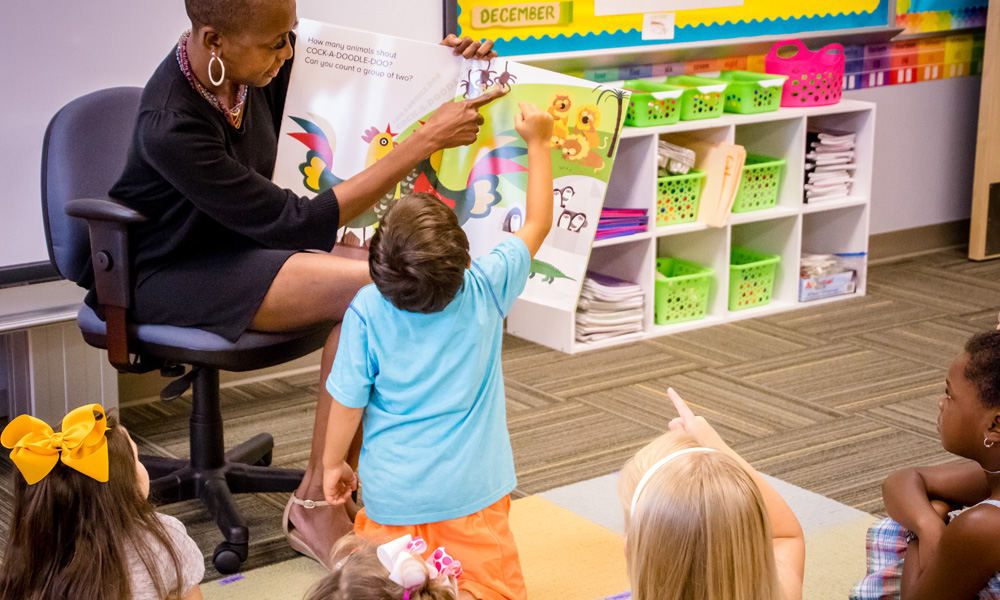
Check out ORIGO’s Big Books and Animated Big Books for fun ways to incorporate mathematical language into your math lessons.

11. Differentiate Without Lowering Expectations
Supporting diverse learners doesn’t mean lowering the level of thinking—it means adjusting how students access it.
Providing scaffolds, visual supports, or alternative entry points ensures that all students can engage in meaningful problem-solving. High expectations, paired with the right support, lead to stronger outcomes for all learners.

12. Create a Classroom Culture That Values Growth
A positive math culture can make all the difference—especially for students who may feel behind.
When mistakes are viewed as opportunities to learn, students are more willing to take risks and engage in challenging work. Building this kind of environment fosters confidence, resilience, and a stronger mathematical identity.
Incorporating collaborative activities, such as the math games found in ORIGO Fundamentals, can further support this by encouraging student discourse, strategic thinking, and a shared sense of progress in learning.
For fun project ideas to keep your students engaged and learning through the end of the year, check out these from ORIGO!

What Truly Stays With Students
At the heart of math readiness is not a checklist of completed standards, but a foundation of understanding that students can carry forward.
When students can:
- Think flexibly about numbers
- Understand and apply operations
- Use models to represent ideas
- Explain their reasoning
they are truly prepared for what comes next.
Because the goal isn’t just to move students to the next grade level—it’s to equip them with the mathematical thinking that will stay with them long after they leave your classroom.

 1-888-674-4601