


 1-888-674-4601


Insights
The Math Concepts Students Should Know Before Moving On
As the school year winds down, teachers face a familiar and important question: Are my students truly ready for the next grade level in math? While standards, pacing guides, and assessments provide structure, they don’t always tell the full story. A student may complete assignments or pass a test, but still lack the deep understanding needed to build on those skills next year.
So instead of asking “Did we cover everything?” a more meaningful question is:
“What math concepts and abilities should students actually carry with them?”
The answer lies in focusing less on isolated skills and more on the big ideas that support long-term mathematical thinking.
Understanding the Role of Standards
Standards—such as your state standards or the common core—outline what students should learn at each grade level. They are essential for consistency and progression. However, they are best viewed as a roadmap, not a checklist.
Each standard connects to broader mathematical ideas:
- Number sense
- Operations and algebraic thinking
- Place value understanding
- Fractions and proportional reasoning
- Measurement and data
- Geometry
When students grasp these core ideas, they are far more prepared to tackle new learning—even if every single standard hasn’t been mastered perfectly.

The Big Ideas Students Should Leave With
Across K–5 classrooms, several key concepts consistently emerge as critical for long-term success. These are the understandings that matter most.
1. Strong Number Sense
Students should leave each grade with a flexible understanding of numbers—not just the ability to compute.
This includes:
- Recognizing the size and value of numbers
- Comparing and ordering numbers
- Decomposing and composing numbers in multiple ways
- Estimating and checking for reasonableness
What this looks like in practice:
A student who understands that 347 can be thought of as 300 + 40 + 7—or even 34 tens and 7 ones—is far better prepared than a student who can only read the number aloud.

2. Understanding of Operations (Not Just Procedures)
Students should understand why operations work and when they are useful for solving problems, not just how to perform them.
This includes:
- Addition and subtraction as joining, separating, and comparing
- Multiplication as equal groups, arrays, and area
- Division as sharing and grouping
- Relationships between operations (fact families, inverse operations)
Key ability:
Students can explain their thinking and choose an appropriate operation and strategy—not just apply a memorized algorithm.
3. Place Value as a Foundation
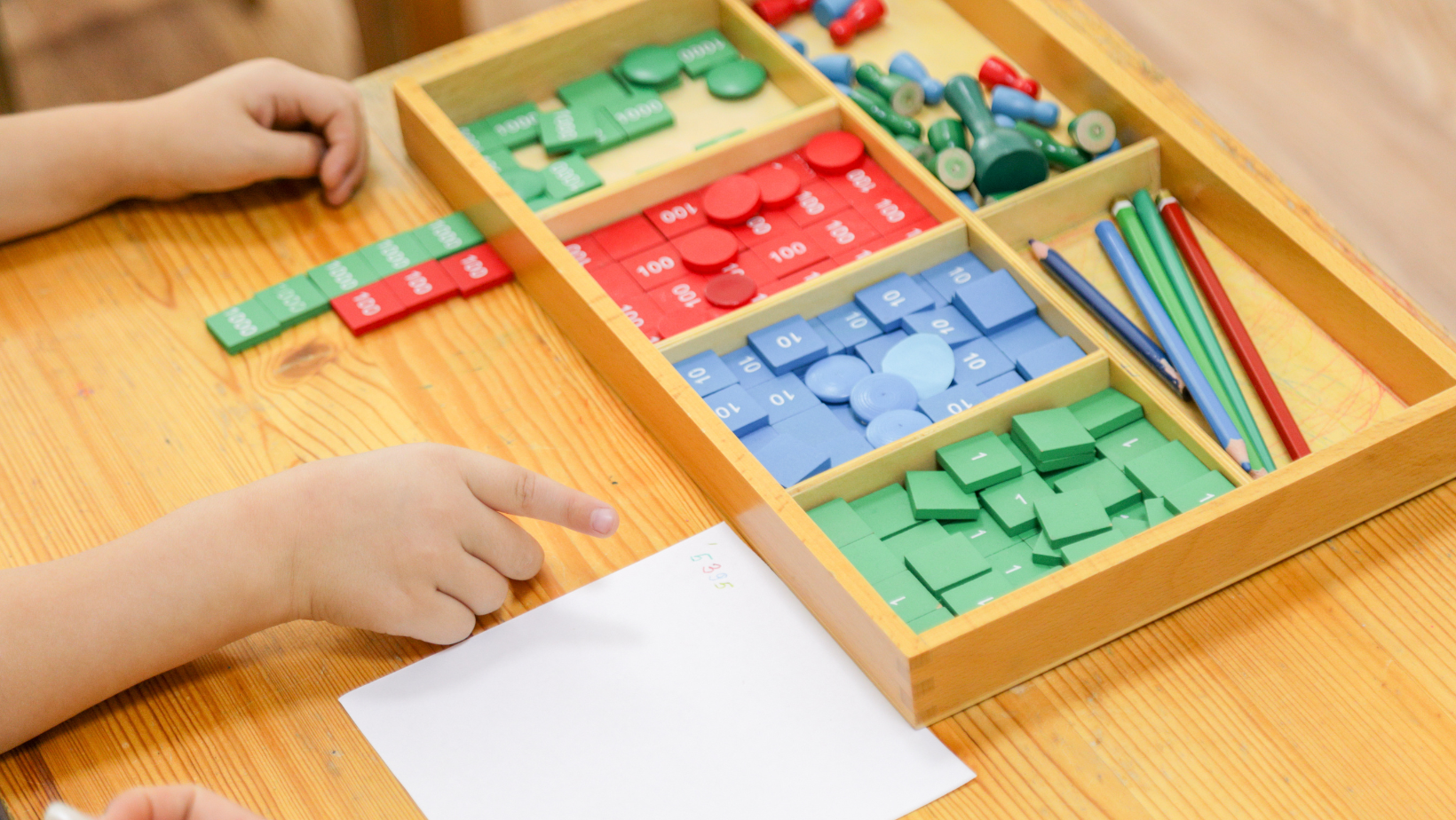
Place value is one of the most critical concepts in elementary mathematics. It underpins nearly every other area.
Students should be able to:
- Understand that digits represent different values depending on position
- Rename numbers flexibly (e.g., 1 hundred = 10 tens)
- Use place value to support mental math and computation
Why it matters:
Without a strong place value foundation, students often struggle with multi-digit operations, decimals, and later algebraic thinking.
4. Fraction Understanding (Beyond Memorization)
Fractions are a major shift in thinking—and one of the most common areas where gaps appear.
Students should understand:
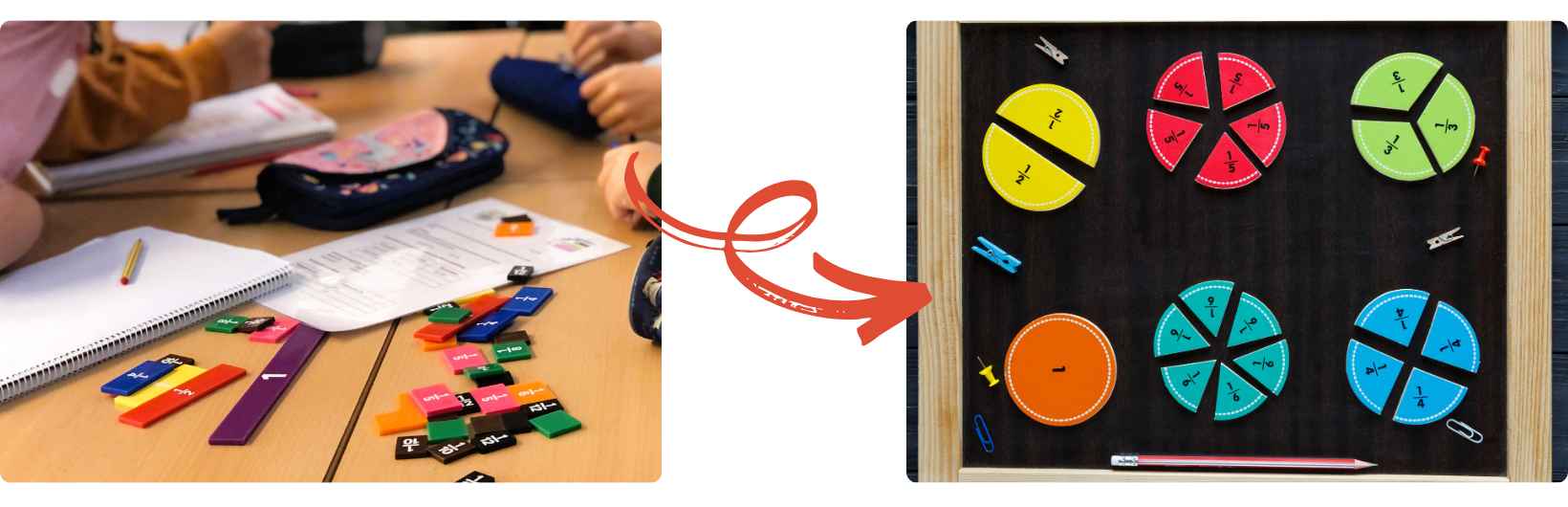
- Fractions as equal parts of a whole
- Fractions as numbers on a number line
- Equivalence (e.g., 1/2 = 2/4)
- Comparison of fractions using reasoning
What to look for:
Students can reason about fractions (e.g., knowing 3/4 is greater than 2/3 because of size and context), not just apply rules.

5. Mathematical Reasoning and Problem-Solving
Beyond content, students need the ability to think mathematically.
This includes:
- Making sense of problems
- Choosing strategies
- Explaining reasoning
- Persevering through challenges
These align closely with practice standards, such as SMPs, especially:
- Making sense of problems and persevering
- Constructing viable arguments
- Using appropriate tools strategically
Key question for teachers:
Can students explain why their answer makes sense?

6. Fluency with Understanding
Fluency is important—but it should be built on understanding, not memorization alone.
Students should develop:
- Efficient strategies for basic facts
- Accuracy and flexibility in computation
- The ability to mentally solve problems
Balance matters:
Fluency without understanding leads to fragile knowledge. Understanding without fluency can limit efficiency. Students need both.
Grade-Band Look: What Readiness Really Means
While each grade has its own standards, it can be helpful to think in grade bands.

K–2: Building the Foundation
Focus areas:
- Counting and cardinality
- Addition and subtraction within 20
- Place value (tens and ones)
- Basic measurement and shapes
Students are ready for the next level if they can:
- Explain addition and subtraction using models or drawings
- Break numbers apart and put them back together
- Understand that numbers represent quantities, not just symbols

Grades 3–5: Expanding Understanding
Focus areas:
- Multiplication and division
- Multi-digit operations
- Fractions and decimals
- Area, volume, and data
Students are ready for the next level if they can:
- Use multiplication and division to solve real problems
- Understand fractions as numbers, not just parts of shapes
- Apply place value to larger numbers and decimals
- Explain their thinking using models, words, and equations

Identifying Students Who Need Additional Support
Even when instruction is strong, some students may need more time and support. The key is knowing what to look for.
Signs a Student Is Ready:
- Uses multiple strategies to solve problems
- Explains reasoning clearly
- Makes connections between concepts
- Self-corrects when something doesn’t make sense
Signs a Student May Need Support:
- Relies on memorized steps without understanding
- Struggles to explain thinking
- Has difficulty with number relationships
- Avoids challenging problems or gives up quickly

What Matters Most Moving Forward
As you reflect on your students’ readiness, it becomes clear that true preparation isn’t about how many standards were “covered”—it’s about what understanding will actually carry forward.
Students who are ready for the next level in math aren’t just the ones who can get the right answer. They’re the ones who can think about numbers, make connections between ideas, and explain their reasoning with confidence. They understand that math is not a set of isolated skills, but a connected system of ideas that build over time.
This is where your focus as a teacher has the greatest impact.
By prioritizing:
- Deep understanding over speed
- Reasoning over memorization
- Connections over isolated practice
you help students develop the kind of mathematical foundation that lasts beyond a single grade level.
And for the students who aren’t quite there yet, this clarity is just as powerful. It allows you to pinpoint exactly where support is needed—whether it’s strengthening number sense, revisiting place value, or rebuilding conceptual understanding of operations.
Because moving students forward isn’t just about promotion—it’s about preparation.
When students leave your classroom with a strong grasp of the big ideas, they don’t just advance to the next grade—they arrive ready to learn, ready to engage, and ready to succeed in whatever mathematical challenges come next.

 1-888-674-4601