


 1-888-674-4601


Insights
Low-Prep End-of-Year Math Activities Your Students Will Love
The final weeks of school can feel like a balancing act. Students are excited for summer, routines begin to shift, and attention spans are often shorter than usual. At the same time, teachers still want learning to remain meaningful—especially in math, where consistent practice and discussion help students retain important concepts before moving on to the next grade level.
The challenge is finding activities that are engaging without requiring hours of preparation.
Fortunately, meaningful end-of-year math review doesn’t need to involve elaborate centers, complicated materials, or stacks of worksheets. Some of the best activities are simple, interactive, and easy to implement using materials teachers already have in the classroom.
The goal during these final weeks isn’t to cram in more content—it’s to keep students thinking, talking, problem-solving, and making connections in ways that feel fun and manageable.
Here are practical, low-prep math activities K–5 teachers can use to keep students engaged while reinforcing core math concepts.

Number Talks That Spark Big Thinking
One of the easiest and most effective end-of-year math activities requires almost no materials at all.
Number talks encourage students to solve mental math problems, explain strategies, and listen to different ways of thinking. They work well because they:
- Build number sense
- Strengthen mental computation
- Encourage flexibility with numbers
- Promote mathematical discussion
For younger students, this might involve:
- Making combinations for 10 or 20
- Counting strategies
- Comparing quantities
Older students might:
- Solve multiplication mentally
- Compare fractions
- Estimate decimal sums
- Analyze multiple strategies
Even five to ten minutes of daily math discussion can help students retain important concepts while keeping participation high.

Whiteboard Challenges Students Actually Enjoy
Mini whiteboards are one of the most versatile low-prep tools for end-of-year review.
Students love the quick pace and low-pressure environment, and teachers get immediate insight into student understanding.
Easy whiteboard activities include:
- Solve-and-show challenges
- Draw a model to match a problem
- True or false equations
- “What’s the mistake?” error analysis
- Create your own word problem
Because students can erase and revise easily, participation tends to increase—especially for students who may feel less confident in math.

Simple Math Games Using Cards or Dice
You don’t need expensive materials to create engaging math review games.
A deck of cards or a few dice can reinforce:
Easy examples include:
- Multiplication War
- Roll-and-Compare
- Fraction Match-Up
- Decimal Build
- Target Number Challenges
Games naturally encourage repetition and strategy use without making students feel like they are completing traditional review work.
Resources such as ORIGO Fundamentals can also support this type of low-prep review by providing structured math games that strengthen mental math, student discourse, and strategic thinking.
Movement-Based Math Activities
By the end of the year, students often need opportunities to move.
Movement-based math review helps students stay focused while reinforcing important concepts in an engaging way.
Low-prep ideas include:
- Scoot activities
- Task card hunts
- Around-the-room problem solving
- Partner relays
- Math scavenger hunts
For example, students might rotate around the classroom solving fraction comparison problems, geometry challenges, or multi-step word problems with a partner.
The movement itself often helps improve focus and participation—especially during longer class periods.

Would You Rather? Math Prompts
This activity is simple, discussion-based, and surprisingly effective.
Present students with two mathematical choices and ask them to defend their reasoning.
Examples:
- Would you rather have 1/2 of a pizza or 3/8?
- Would you rather solve 4 × 25 or 5 × 20?
- Which estimate is more reasonable?
The goal isn’t just choosing an answer—it’s explaining why.
These types of prompts help students:
- Strengthen reasoning skills
- Practice mathematical language
- Compare strategies
- Engage in low-pressure discussion
They also work across multiple grade levels with very little preparation.
Read this article for more ideas!

Error Analysis Activities
Students often learn just as much from mistakes as they do from correct answers.
Error analysis activities encourage students to examine incorrect solutions and determine what went wrong.
For example:
- “Find the mistake.”
- “Do you agree with this strategy?”
- “How would you fix this?”
These activities promote:
- Critical thinking
- Attention to detail
- Mathematical reasoning
- Productive discussion
They also help students recognize common misconceptions before moving to the next grade level.

Low-Prep Real-World Math Challenges
Real-world math tasks help students see the relevance of what they’ve learned throughout the year.
Simple challenge ideas include:
- Planning a class party budget
- Designing a dream playground
- Measuring classroom objects
- Comparing prices from grocery ads
- Creating travel routes and schedules
These activities naturally combine multiple concepts such as:
- Operations
- Measurement
- Fractions
- Decimals
- Data analysis
And because they feel authentic, students are often more invested in solving them.
For simple and fun real-world projects to help bring math to life, check out these ideas from ORIGO!
Keep Technology Simple and Purposeful
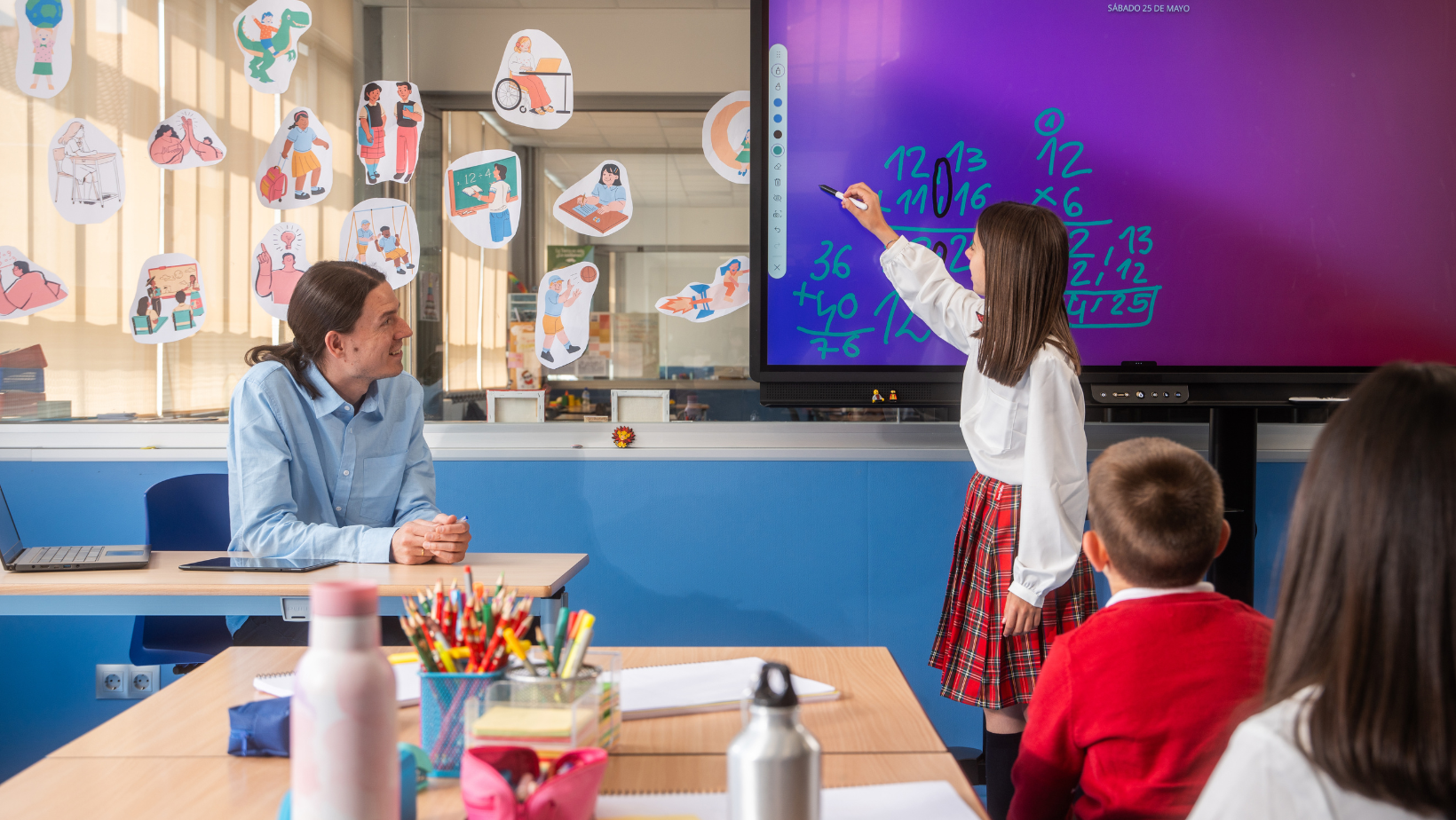
Technology can be helpful during the final weeks of school—but only when it supports meaningful thinking.
The best digital activities allow students to:
- Visualize concepts
- Manipulate models
- Explore patterns
- Receive immediate feedback
Within ORIGO Education’s Stepping Stones 2.0, digital tools available through ORIGO Access allow students to interact with visual models and mathematical representations in engaging ways. Supports such as ORIGO One videos can also reinforce concepts independently without requiring extensive teacher preparation.
Technology works best when it enhances understanding rather than simply increasing speed or screen time.

Mix Concepts Together Instead of Isolating Skills
One common mistake during end-of-year review is focusing on isolated practice.
Students benefit more from mixed review that combines:
- Number sense
- Operations
- Fractions
- Geometry
- Measurement
- Data analysis
This helps students recognize when and how to apply different strategies.
Resources such as ORIGO Think Tanks support this type of interleaved practice by revisiting concepts in purposeful ways that strengthen long-term retention and flexibility.

Make Math Social
The final weeks of school are a perfect time to lean into collaboration.
Partner and small-group activities help students:
- Explain thinking
- Hear multiple strategies
- Build confidence
- Stay engaged
Simple prompts like:
- “How did you solve it?”
- “Can you think of another strategy?”
- “Do you agree?”
can turn even quick activities into meaningful mathematical conversations.
In many ORIGO lessons, student discussion and mathematical discourse are embedded directly into instruction, helping students strengthen both understanding and communication skills.

Focus on Meaningful Engagement, Not Busywork
At the end of the year, students don’t need endless worksheets to stay learning. What they do need are opportunities to think, discuss, explore, and apply what they’ve learned in engaging ways.
The most effective end-of-year math activities are often:
- Simple
- Interactive
- Flexible
- Collaborative
- Low-prep for teachers
- High-engagement for students
Because when students are actively involved in meaningful math experiences, they’re far more likely to retain the concepts that matter most.
And perhaps even more importantly, they leave the school year feeling confident, capable, and excited about math—not burned out by review packets and repetitive practice.
Sometimes the best learning happens in the simplest moments: a quick game, a thoughtful discussion, a mental math challenge, or a problem students genuinely want to solve.

 1-888-674-4601